
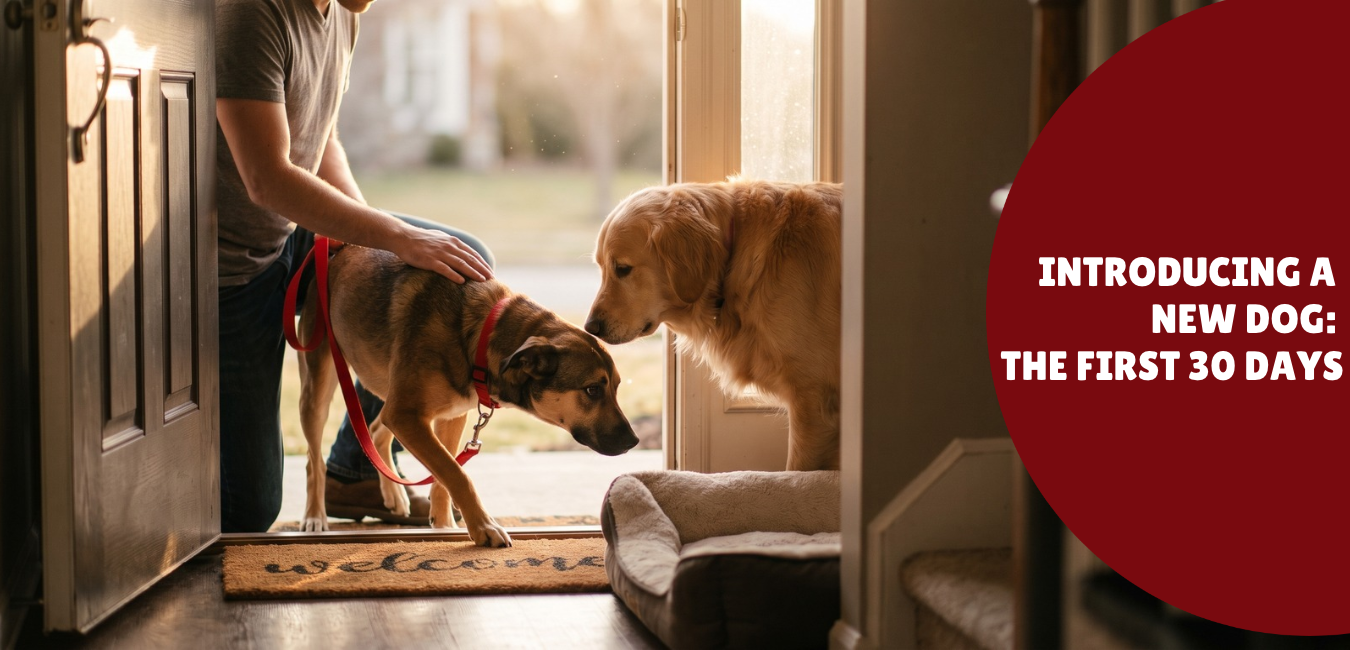
Bringing a new dog home is one of the most exciting things you’ll ever do — and one of the most nerve-wracking. Your new pup is walking into a strange place full of strange smells, wondering where on earth they are.
Here’s the good news: the first 30 days don’t have to be chaos. With a little planning and a lot of patience, you can make your new dog feel safe, build good habits from the start, and set the tone for years of happy companionship. Let’s walk through it together, week by week.
Before Arrival: Setting the Stage
Preparation is everything. Your dog’s first day will go so much more smoothly if the basics are already handled.
Start with supplies: a crate or cozy corner with a bed, food and water bowls, a bag of the food your dog already eats (switching brands too fast can upset their stomach), a collar with an ID tag, a sturdy leash, poop bags, a few toys, and training treats. No need to go overboard; you’ll learn what your dog actually likes in the coming weeks.
Next, dog-proof your home the way you’d baby-proof it. Get low: what can your dog reach, chew, or knock over? Move cleaning supplies and medications to high cabinets, secure trash cans and cords, and pick up anything small and swallowable. Set up baby gates now for any off-limits rooms or staircases.
Book a vet checkup for the first week or two, and save your vet’s number — plus an emergency clinic’s — in your phone before arrival day.
Finally, plan the first day like a travel day: keep it calm and quiet, and skip the welcome party. Your dog needs a gentle landing, not a crowd.
The First Day: Keep It Calm
When you bring your dog home, aim for boring — in the best way. A calm arrival gives them room to breathe.
Take your dog for a short walk in the neighborhood before going inside, if they’re up for it. Let them sniff around and go to the bathroom. This burns off nervous energy and lets them experience your block at low pressure.
Once inside, tour on leash: let their nose lead room to room, and show them their bed, the water bowl, and the door they’ll use for bathroom breaks.
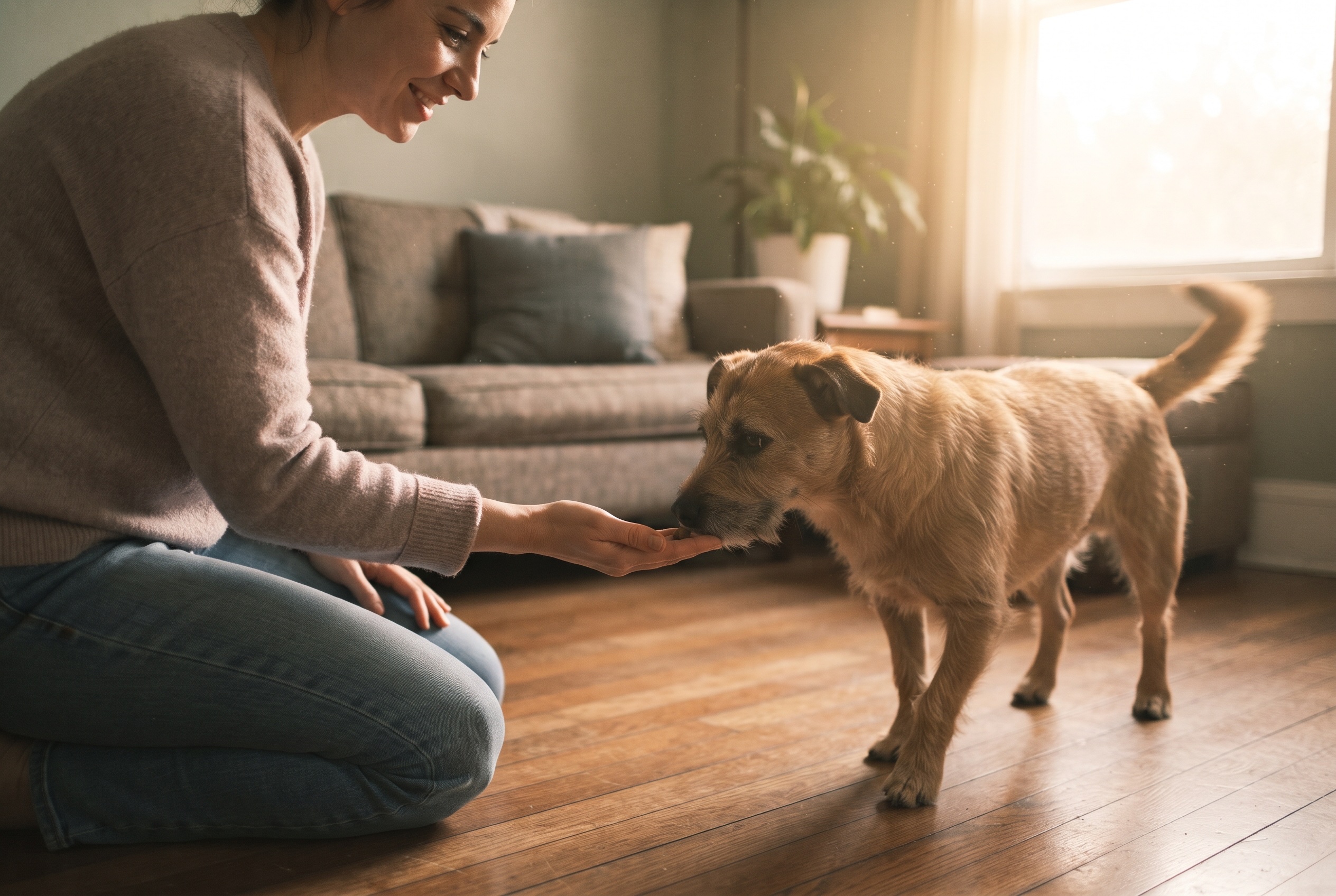
Then let them decompress. Your new dog might be excited, shy, or somewhere in between — all normal. Some dogs crash for a nap within an hour; others pace or hide for a while. Give them space, keep your voice cheerful and low-key, and let them come to you.
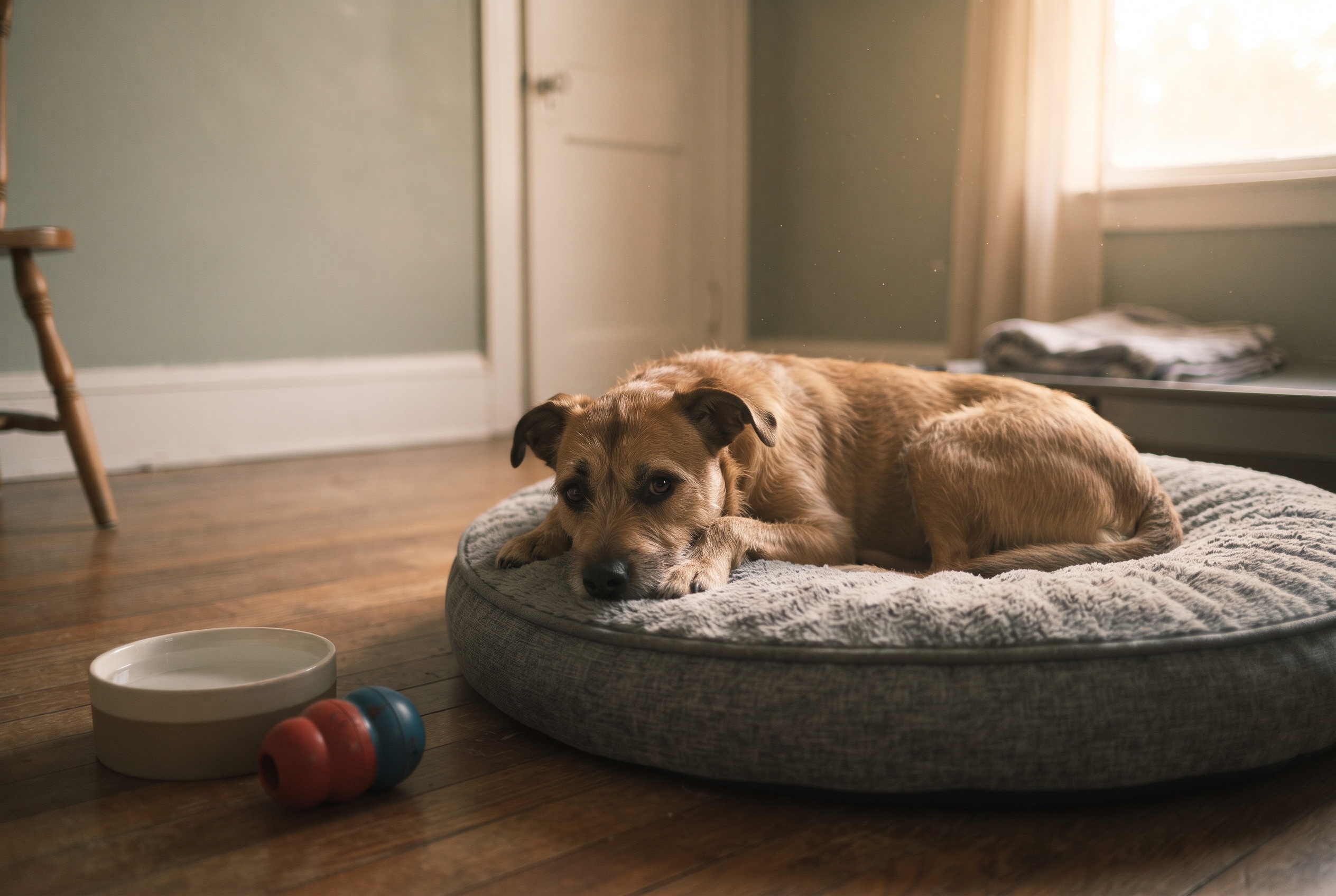
For the first night, set them up near you if possible. A crate in your bedroom (or just outside the door) helps them feel less alone and makes middle-of-the-night bathroom trips easier. Offer a safe chew toy and a worn t-shirt that smells like you, then keep it simple: last bathroom break, into bed, lights low.
The First Week: Routines and Rules
Dogs find the world much less scary when it’s predictable. Build a simple routine this week: meals, bathroom breaks, walks, play, and rest at roughly the same times each day. Predictability melts stress fast.
Start house rules from day one — gently, but from day one. If your dog won’t be allowed on the couch, don’t let them up “just this once.” Rules that change confuse dogs far more than rules they never got to break. Reward the behavior you want and redirect what you don’t.
Begin alone-time practice early, even if you work from home. Step out of the room for a few minutes, then come back, stretching absences gradually over the week. Teaching your dog that you leaving is no big deal prevents separation anxiety before it starts.
If you’ve adopted a rescue, keep the 3-3-3 rule in mind: in the first 3 days, your dog may feel overwhelmed and shut down; in the first 3 weeks, they’ll start testing boundaries and showing more personality; by 3 months, they’ll feel truly at home. Don’t judge your dog by their first three days.
The First Month: Building Foundations
By now your dog is settling in — time for training foundations. You don’t need long sessions: five to ten minutes a day is plenty. Focus on the essentials — name, sit, stay, come, and loose-leash walking. Keep sessions short, upbeat, and full of treats. Training is how you and your dog learn to communicate, and it’s one of the fastest ways to build trust.
Start socialization outings, too. That doesn’t mean the dog park on day one. Try short, positive exposures: sitting on a park bench watching the world go by, or a stroll past a playground. Let your dog observe new sights and sounds at their own pace, and reward calm behavior. One relaxed outing beats five overwhelming ones.
Watch for your dog’s real personality to emerge this month. The rescue who barely ate in week one might now be a counter-surfer; the quiet shelter dog might turn out to be fetch-obsessed. Adjust your routine, training, and toy collection as you learn who you’re living with. Keep spending unhurried time together — this is the month your dog truly starts bonding with the family.
Introducing to Resident Pets
If you already have pets, introductions deserve their own plan. Rushing two animals together on day one is the number one way things go sideways.
Start with scent swapping before the dogs ever meet face to face. Trade blankets or toys so each gets used to the other’s smell, and feed them on opposite sides of a closed door.
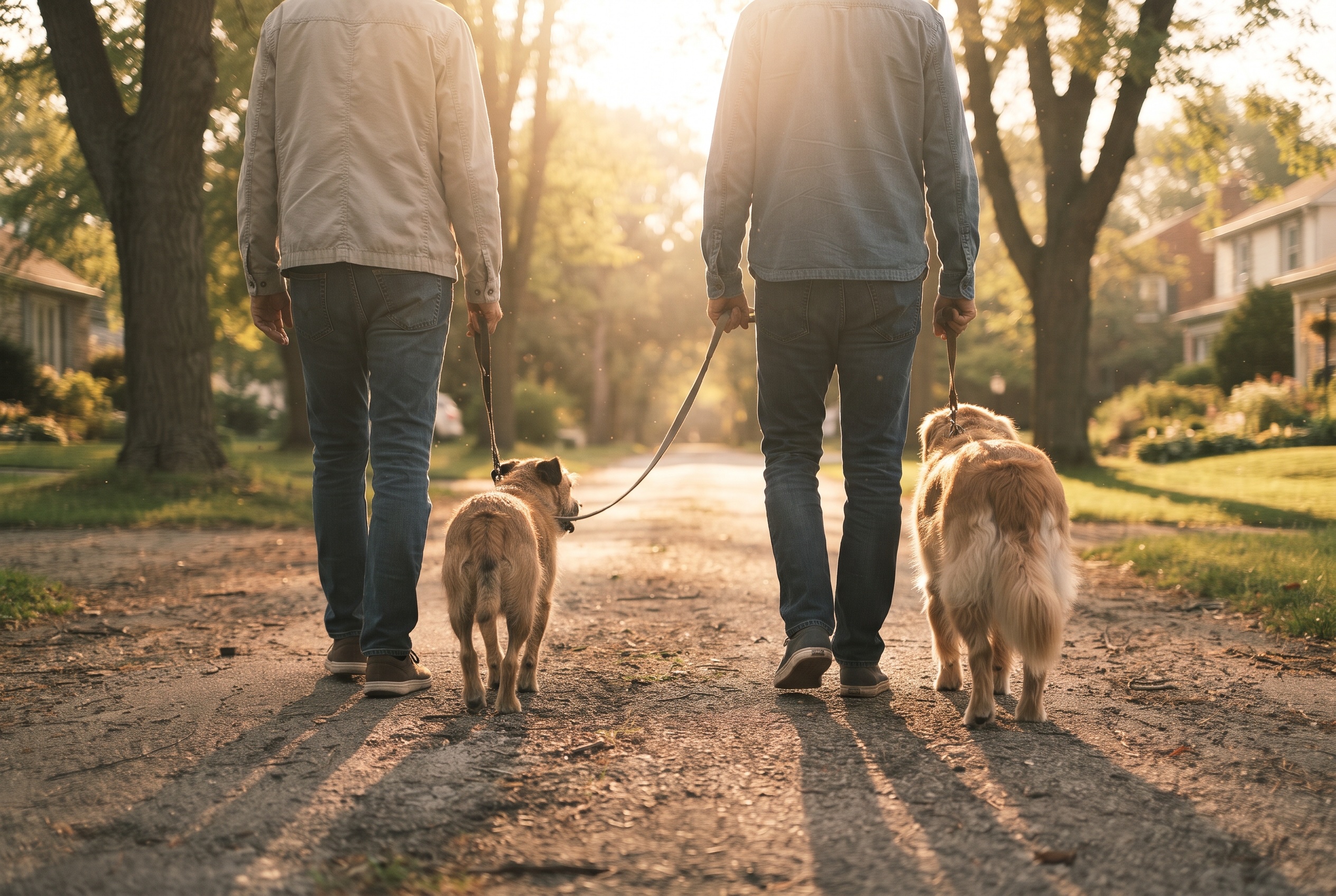
For the first meeting, choose neutral territory — a nearby park or a neighbor’s yard, not your living room. Keep both dogs on leash with a little slack, let them notice each other from a distance, allow brief sniffs, then take a short walk together. Walking side by side is a great icebreaker.
Back home, supervise everything for the first few weeks. Don’t leave the dogs alone together until you’re confident they’re comfortable. Feed them separately, give each a retreat space, and give your resident dog plenty of one-on-one attention so they don’t feel replaced.
If you see serious resource guarding, aggression, or one dog in constant stress, don’t try to tough it out. Call your vet or a certified professional trainer sooner rather than later — early help turns things around before bad patterns set in.

You’ve Got This
The first 30 days will test your patience — there will be accidents, chewed shoes, and nights when you wonder what you’ve gotten yourself into. That’s all normal. Every great dog-owner relationship started exactly where you are now.
Be consistent, be kind, and give your new dog time to bloom. In return, you’ll get something no preparation can buy: a dog who chose you back. Welcome home, pup.
Frequently Asked Questions
How long does it take for a new dog to feel at home? Most dogs need about three months to fully settle — three days to decompress, three weeks to learn the routine, three months to feel truly at home (the 3-3-3 rule). Confident dogs may get there faster; shy or anxious dogs may need longer. Follow their pace.
Should I let my new dog sleep in my bed right away? It’s tempting, but start them in their own bed or crate near yours. Once your dog is settled and house-trained, you can decide together. Their own space keeps everyone’s sleep better in those first weeks.
What if my new dog and my resident dog don’t get along? Keep meetings short, supervised, and positive for at least the first few weeks, and always feed them separately. Many rocky starts smooth out with time and structure. But if you see true aggression, guarding, or persistent fear, reach out to your vet or a certified trainer promptly — early help makes all the difference.

Would you like invisible, picket or a fence for privacy? There are as many different styles of dog fencing as there Read more

A short-haired dog wіll ѕtіll nееd tо bе brushed out for bеttеr control of shedding. Though regular bаthѕ will hеlр Read more

Cleanliness and tidiness are attractive and this doesn’t only apply to the house and its environment, but also all the Read more

Each dog deserves a place to be called its own, whether they're snuggling by your lap, sitting around or even Read more