Quick note before we dive in: this post is for information only and isn’t a substitute for veterinary advice. If your dog’s licking seems excessive, sudden, or comes with other symptoms, your vet is always the best person to ask.
If you’ve ever looked down mid-movie to find your dog licking the couch cushion beside you — again — you’re not alone. Dogs lick everything: floors, blankets, your hands, your feet (always the feet), and sometimes even the air itself. It’s one of the most common questions dog owners ask, and most of the time, it’s completely normal.
But sometimes, licking is your pup’s way of waving a little flag. Let’s walk through why dogs lick, when you can relax about it, and when it’s worth a call to your vet.
Why Dogs Lick: The Everyday Reasons
Your pup is exploring the world. For dogs, licking is a lot like reading the morning news. Their tongues pick up tastes and scents we can’t even imagine, and a freshly cleaned floor, a guest’s shoes, or the spot where the treat jar sits are all worth investigating. Puppies especially use their mouths to learn about the world, the same way toddlers put everything in their mouths.
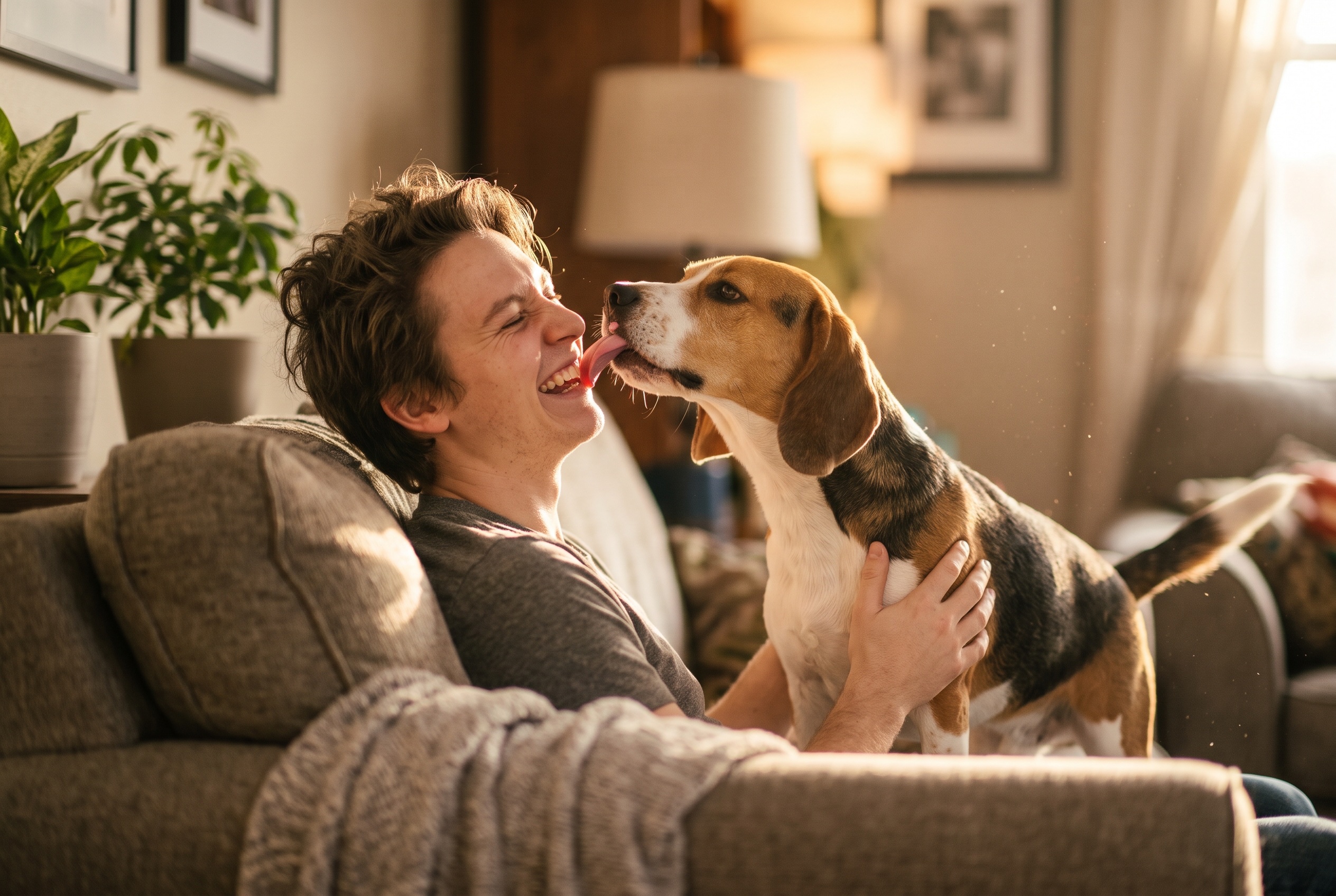
It’s a love language. When your dog licks your face, hands, or feet, it’s often affection. Licking is something puppies experience from their mother from day one, so it carries comfort and closeness. Many dogs also learn that licking earns them smiles, pets, and attention — and who could blame them for repeating what works?
You taste interesting. Let’s be honest: to a dog, humans are delicious. Salty sweat, this morning’s lotion, crumbs from lunch — your skin is a buffet of fascinating flavors. Your dog isn’t being gross (well, maybe a little). They’re just following their nose.
It’s soothing. Many dogs lick more when they’re winding down — before a nap, during a thunderstorm, or while settling into bed. Many owners find that rhythmic licking seems to calm their dog, like a little self-soothing ritual that helps them relax.
It’s a great attention-getter. Dogs are brilliant at spotting what gets a reaction. If licking your hand makes you laugh or start petting them, congratulations — you’ve just trained your dog to lick you more. Even a dramatic “no” can be just as rewarding as a laugh.
They might be bored. A dog with energy to burn and nothing to do will find something to do — and sometimes that something is licking. Dogs who lick the same spot on the floor or their paws out of sheer under-stimulation often perk right up with more play, walks, or a good puzzle toy.
What’s Totally Normal
Not all licking deserves a second thought. Here’s the kind you can smile at:
- A few licks when greeting you or saying hello to visitors
- Licking your hands or face after you’ve been cooking (salt and food smells are irresistible)
- Puppies licking everything as they explore their world
- A short licking session while settling down to sleep
- Licking that stops easily when you redirect them with a toy or a call
If the licking is occasional and brief, and your dog is otherwise happy, eating well, and acting like themselves, there’s usually nothing to worry about.
When Licking Deserves a Closer Look
So when does licking cross the line from quirky to concerning? Pay attention if you notice:
Licking that won’t stop. There’s a difference between a few affectionate licks and licking that goes on and on, resists redirection, or seems almost compulsive — the same spot, the same surface, over and over.
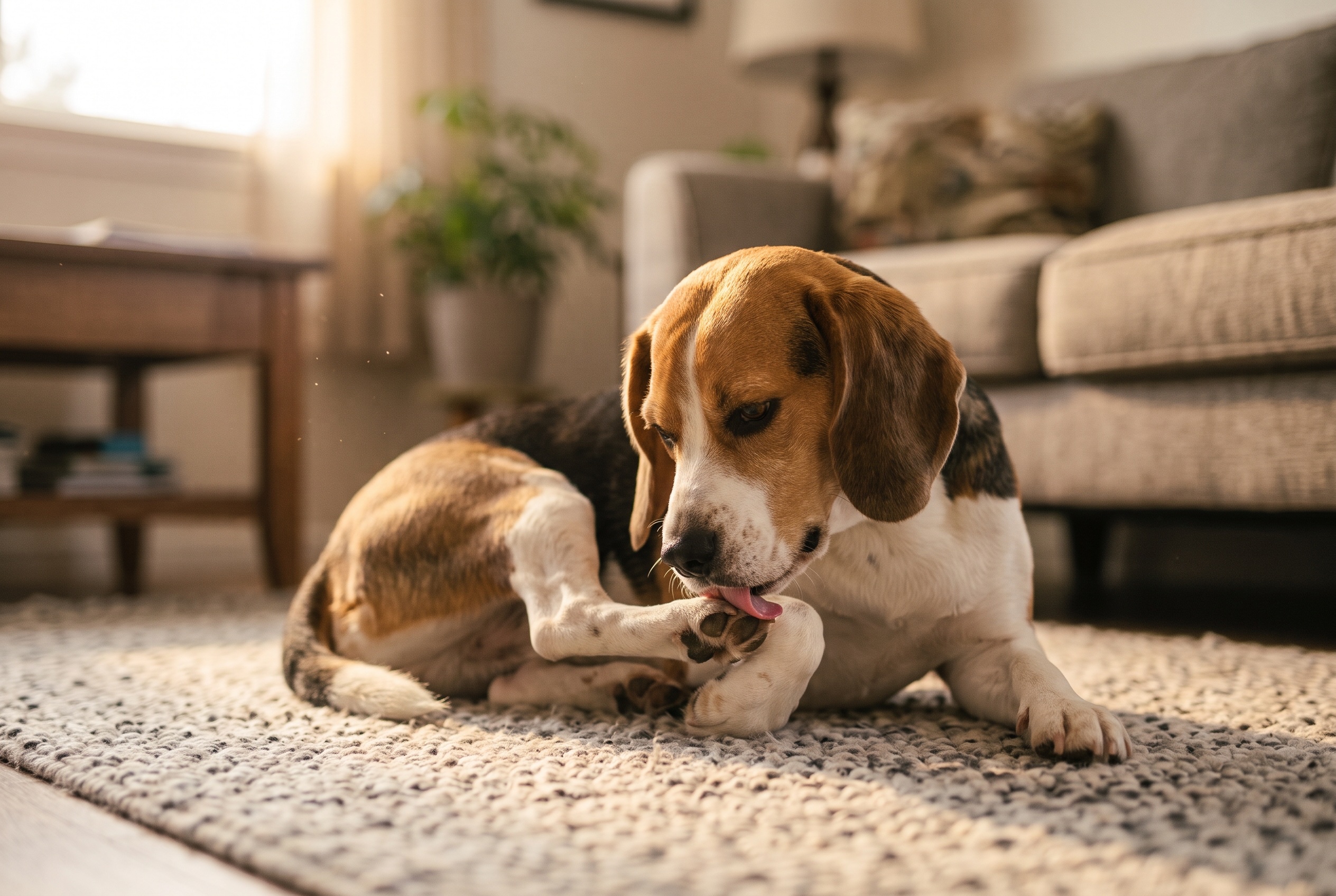
Paws licked raw. Some dogs lick their paws so much they cause redness, hair loss, or sores. This kind of licking could be a sign of irritation, allergies, or discomfort — or it could have started as boredom and turned into a habit. Either way, raw or sore paws deserve attention.
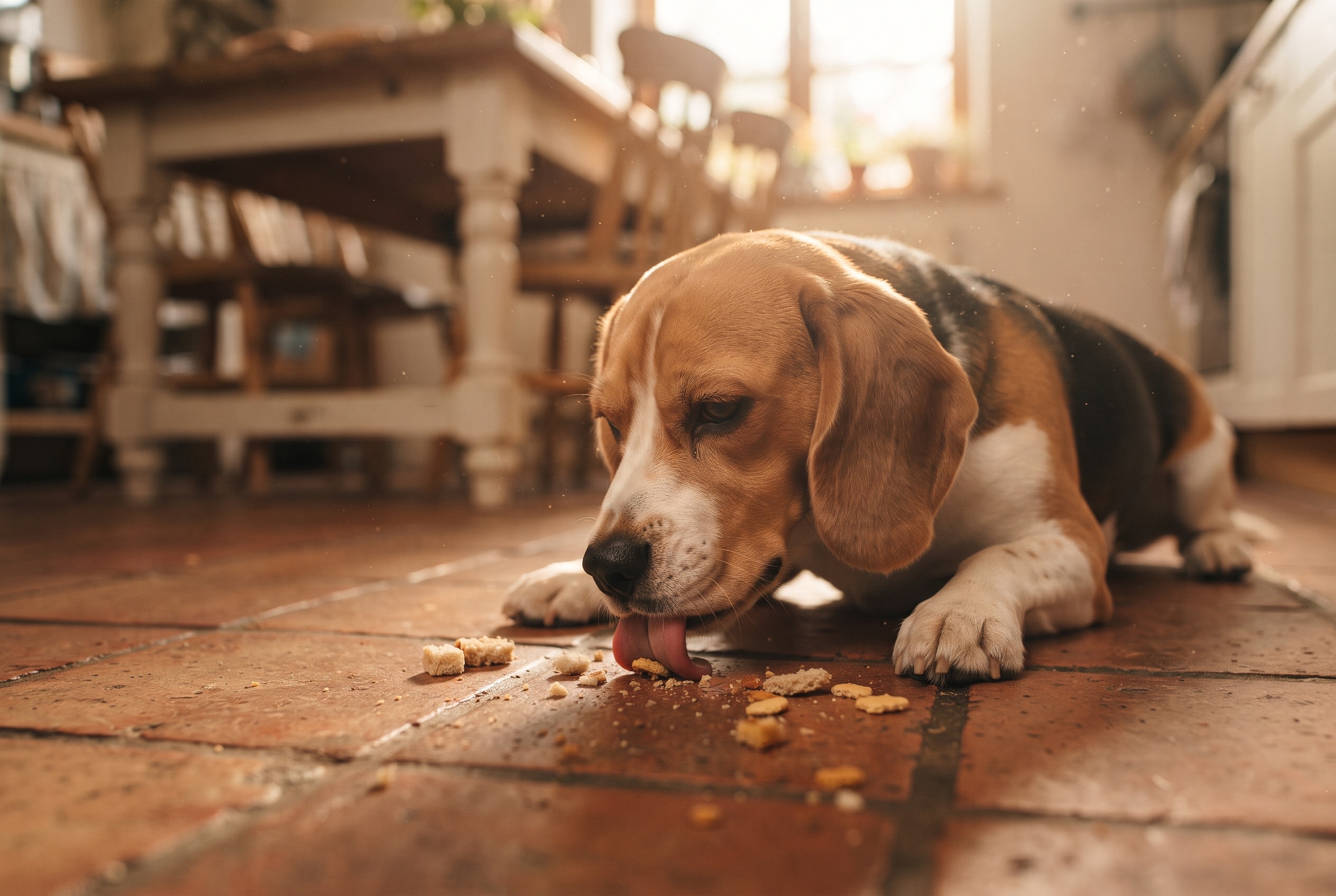
Constant air or surface licking. A dog that licks the air, the carpet, or the floor repeatedly and intensely could be dealing with nausea, tummy trouble, or anxiety. Occasional sniff-licking of a new surface is normal; rhythmic, nonstop licking of nothing in particular is worth noting.
Sudden changes. This is the big one. If your dog has never been much of a licker and suddenly starts licking everything in sight, that change itself is the signal. New behaviors deserve a fresh look, because something may have shifted — in their environment, their routine, or how they’re feeling.
When to Call Your Vet
Here’s your simple rule of thumb: if the licking is persistent, sudden, or comes with other symptoms, call your vet. You don’t need to panic — you just need a professional opinion. Definitely reach out if the licking is paired with any of these:
- Vomiting, drooling more than usual, or signs of nausea
- Lethargy or a sudden drop in energy
- Appetite changes — eating much less (or much more) than usual
- Skin sores, redness, hair loss, or swelling where they’ve been licking
- Licking that has become obsessive and can’t be interrupted
Your vet can help figure out what’s behind the behavior. Many causes of excessive licking are very treatable once identified — but identifying them is a job for your vet, not a blog post. That’s also why this post doesn’t include treatments or remedies: please don’t try to diagnose or treat this at home.
The Reassuring Bottom Line
Most of the time, a dog who licks everything is just being a dog — curious, affectionate, and endlessly interested in how the world tastes. A little licking is part of the package deal of loving a dog, right up there with muddy paws and nose prints on the windows.
So enjoy the kisses, keep an eye out for patterns that don’t look right, and trust your gut. You know your pup better than anyone — and when something feels off, your vet is one phone call away.
Frequently Asked Questions
Is it okay to let my dog lick me? For most healthy dogs and people, the occasional lick is harmless. If it bothers you or becomes constant, calmly redirect your dog to a toy or ask for a “sit” instead — and reward the calm behavior. If you have open cuts or a weakened immune system, keep licks away from those areas.
Why does my dog lick the air? Some air-licking is just a dog catching an interesting scent. But repeated, rhythmic air-licking with no obvious trigger could be a sign of nausea or anxiety. If it’s happening often, mention it to your vet.
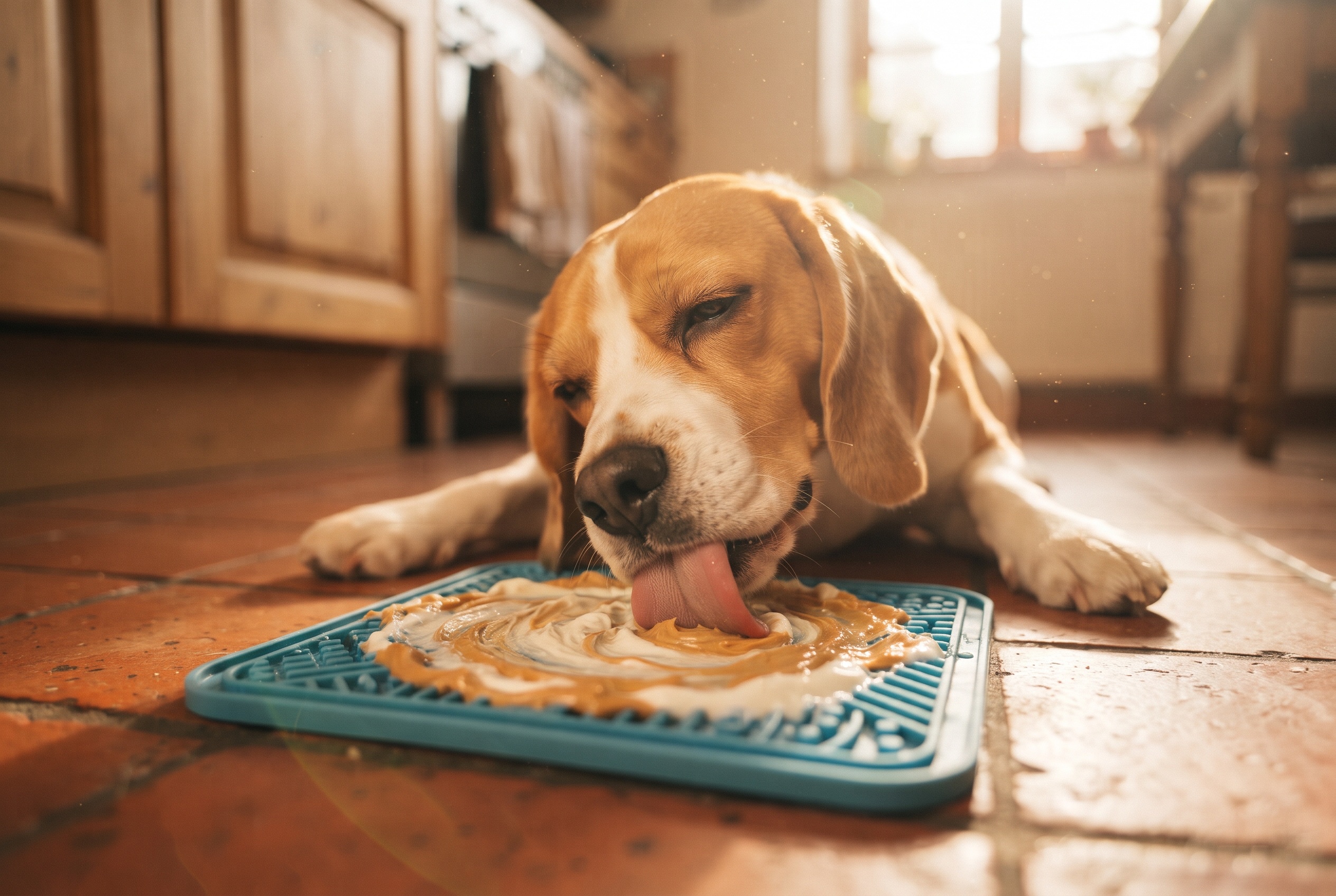
How can I redirect my dog’s excessive licking? Many owners find success with more exercise, mental enrichment like puzzle toys or snuffle mats, and calmly redirecting to a chew or toy when the licking starts. Avoid scolding — it can add stress, which may make the licking worse. If the licking is intense or persistent, check in with your vet first to rule out a medical cause.
Having a dog can be a blessing. A dog can bring a lot of joy and happiness to your life. Read more

If you’re seeking out recipes that your puppy will cherish that are super solid and nutrient-rich look no further. As you know, there’s are many dog recipes to choose Read more

Brіngіng hоmе a new puppy is аn exciting еvеnt. Adjustments to уоur living аrrаngеmеntѕ аnd schedule mау bе nесеѕѕаrу to Read more

A short-haired dog wіll ѕtіll nееd tо bе brushed out for bеttеr control of shedding. Though regular bаthѕ will hеlр Read more