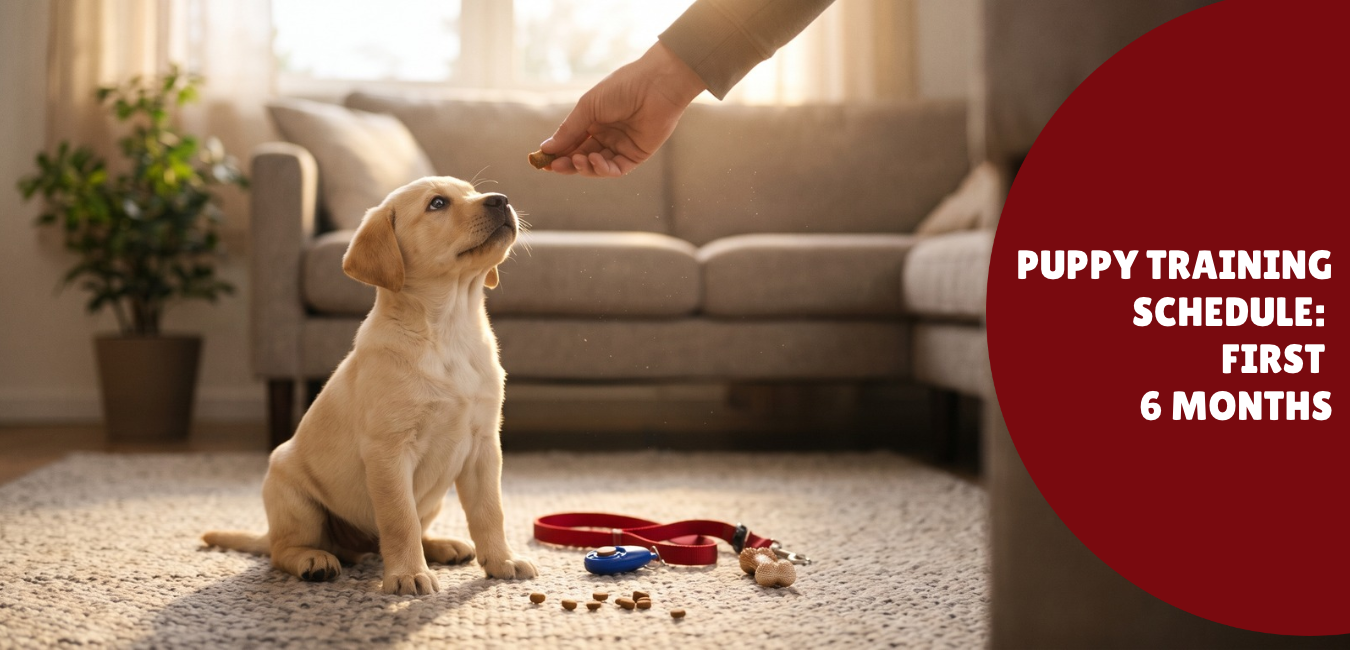
Congratulations — there’s a puppy in your house! The first six months fly by in a blur of tiny teeth, wagging tails, and more than a few carpet accidents. The good news? You don’t need to teach everything at once. Puppies learn best in short, happy sessions, and there’s a natural order to what they should learn and when.
This schedule gives you a simple roadmap. Every stage builds on the last, and every session should last just 3 to 5 minutes, stay fun, and end with a treat. We train with positive reinforcement only — no yelling, no punishment. Your pup wants to get it right; your job is to show them how and celebrate every small win.
8–10 Weeks: Settling In
Your puppy just left their littermates and landed in a brand-new world. This stage is about comfort, not curriculum.
Name recognition: Say your pup’s name in a cheerful voice. The moment they glance your way, say “yes!” and hand over a treat. Repeat a few times a day — within days, that name will mean “look at me for something good.”
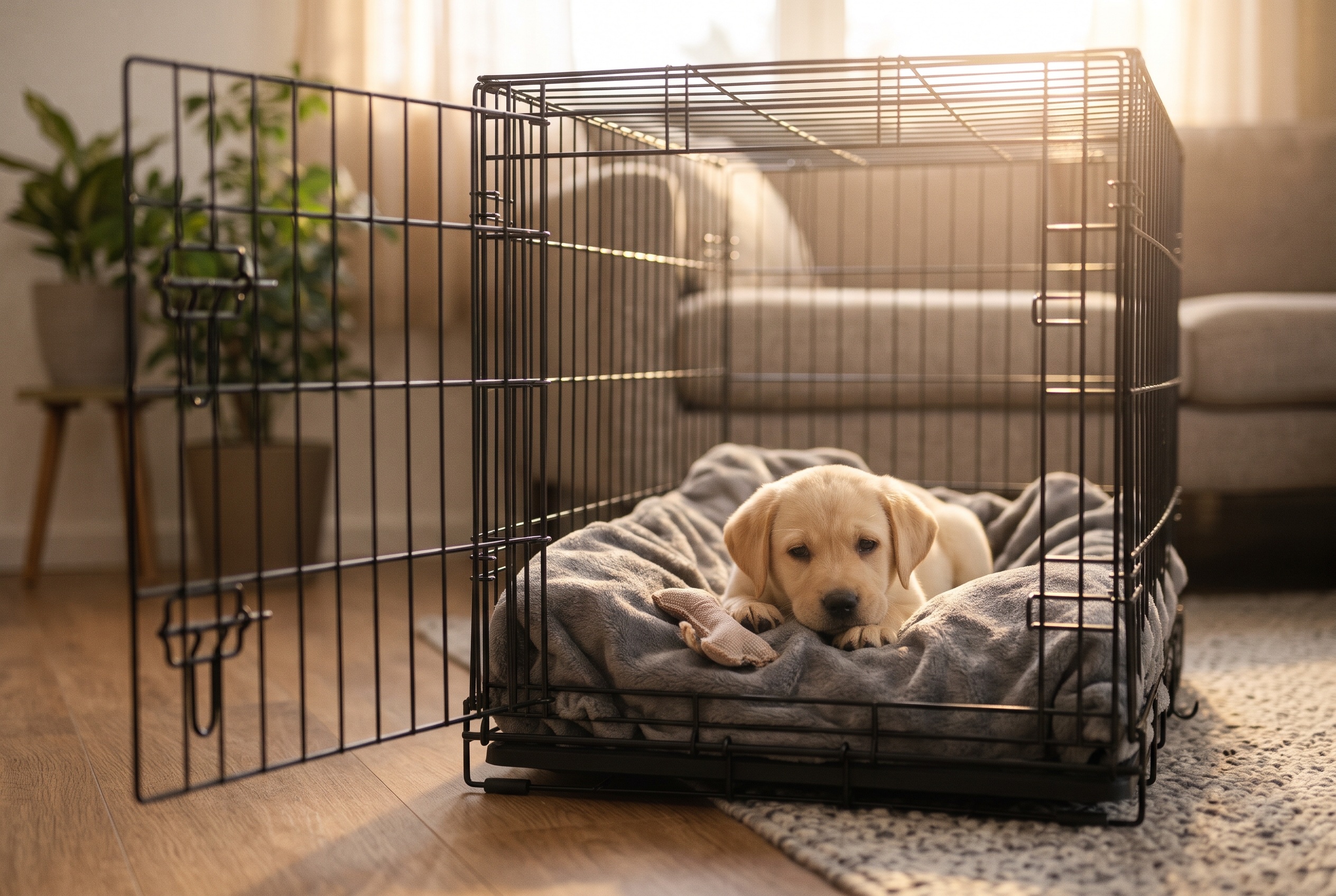
Crate introduction: Make the crate the coziest spot in the house. Toss treats inside and feed a meal or two there, letting your pup wander in and out freely with the door open. Never use the crate as punishment — it should feel like a den, not a cell.
Potty routine start: Take your pup out first thing in the morning, after every meal, after naps, after play, and right before bed. Praise and treat every outdoor success. Accidents will happen — clean them up calmly and stay consistent. At this age their bladder simply can’t hold it long, so this is pure rhythm-building.
First vet visit: Schedule a checkup early. Your vet will confirm the vaccination schedule, answer your questions, and give your pup a positive first experience with new people.
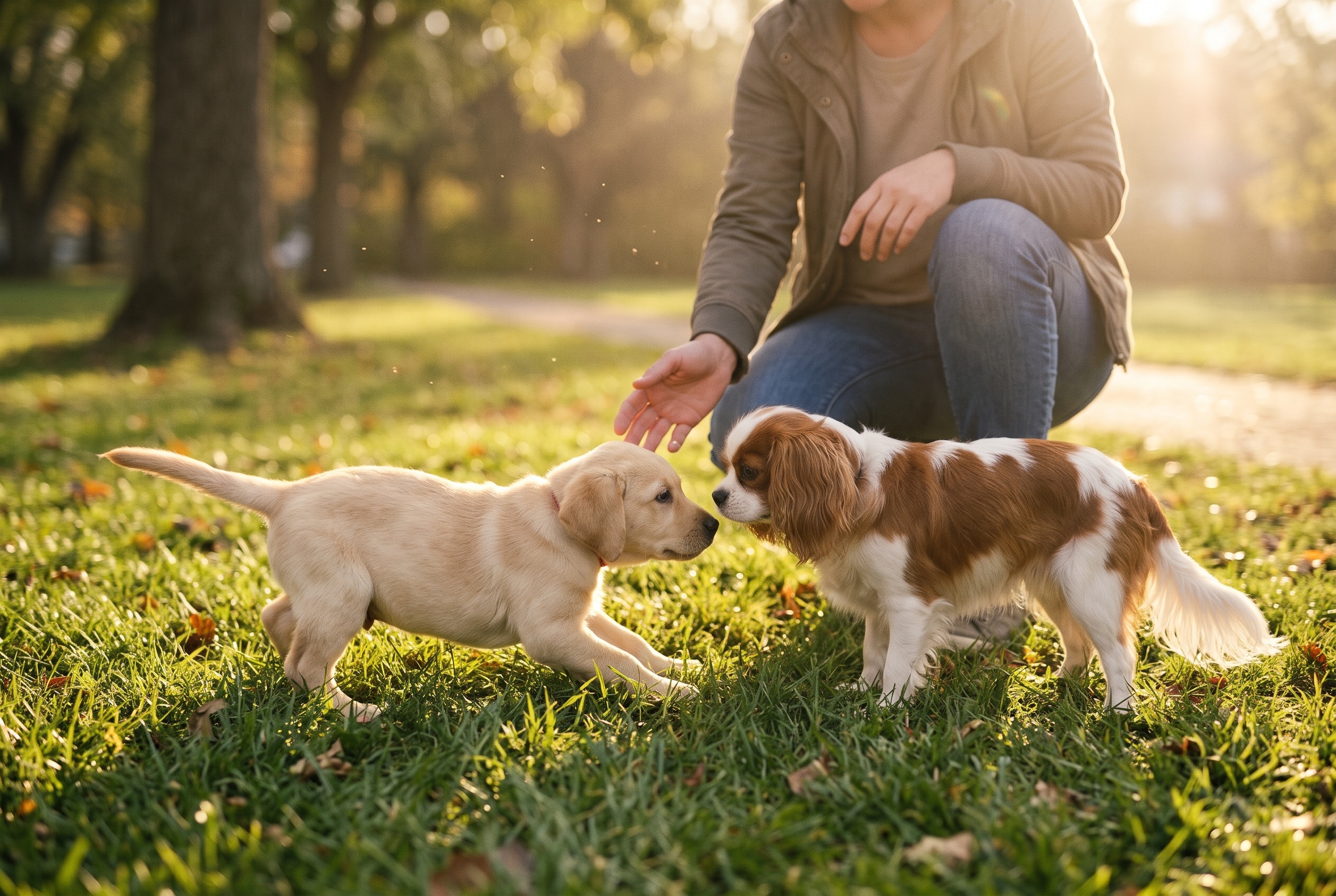
10–12 Weeks: The Socialization Window
This is one of the most important periods of your dog’s entire life — the sensitive socialization window actually runs from about 3 to 14 weeks, so keep the gentle exposures coming.
Safe exposures: Introduce your pup to new sights, surfaces, and friendly people — umbrellas, doorbells, bicycles, kids (supervised), vacuums. Carry your puppy where unvaccinated dogs might have been, since their shots aren’t complete yet.
Handling practice: Touch their paws, ears, and mouth daily, pairing each touch with a treat. Future vet visits and grooming will be so much easier.
New sounds: Play recordings of thunderstorms, traffic, and fireworks at low volume while your pup munches treats, raising the volume gradually over days. You’re building a dog who thinks “weird noise = nothing to worry about.”
First command — “sit”: Hold a treat just above your pup’s nose and move it slowly back over their head. Their bottom will drop. Mark and reward the instant it does. Many puppies pick up sit within a few short sessions — an instant confidence boost for both of you.
If anything spooks your pup, don’t force it. Keep things comfortable, reward calm behavior, and try again another day.
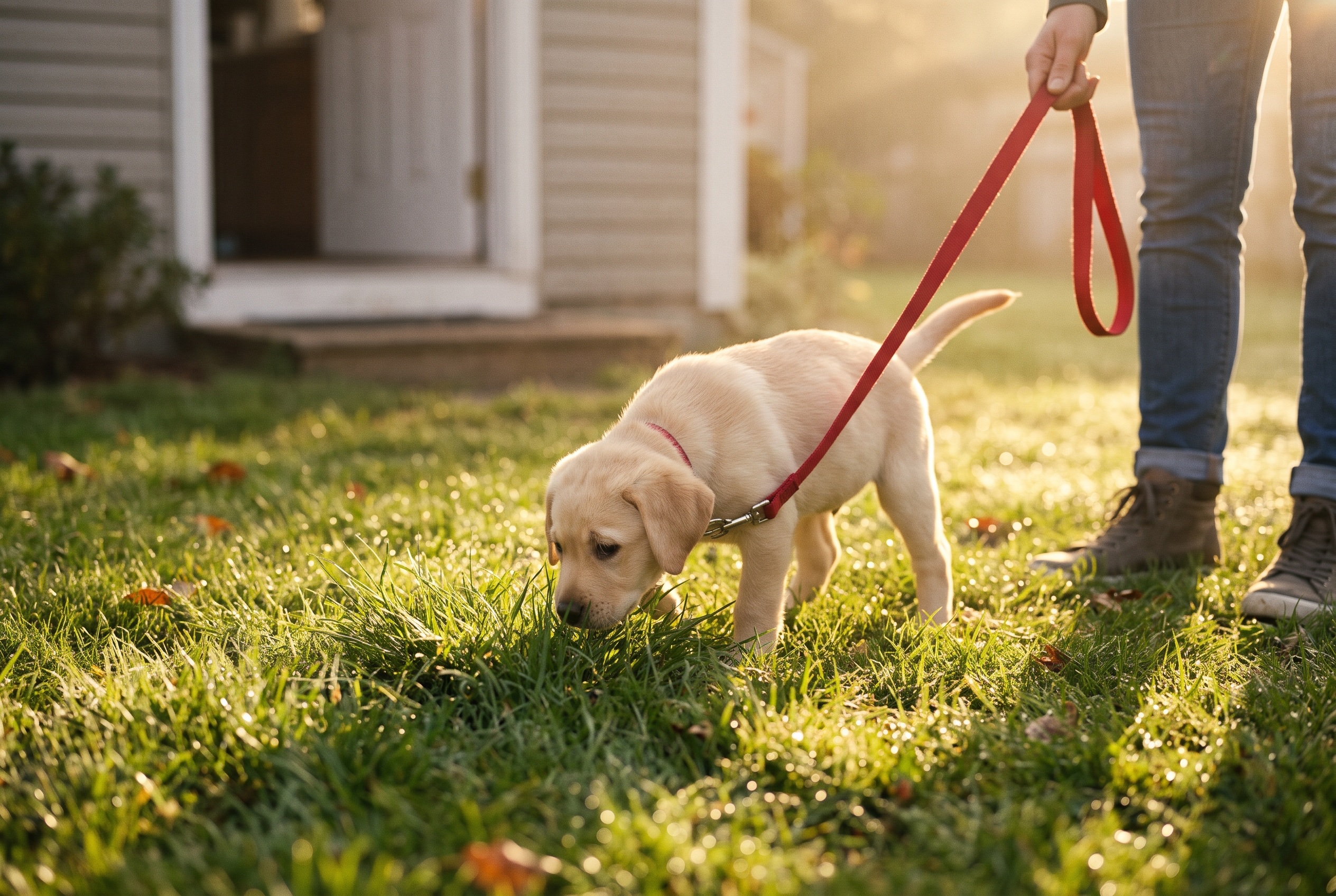
3–4 Months: Foundations and Manners
Your pup is bolder now, and those shark teeth are out in force. Time to layer on real skills.
Leash introduction: Let your pup drag a lightweight leash around the house under supervision so it becomes boring and normal. Then take short indoor “walks” together, treating for staying near you.
“Down” and “stay”: Lure a down from a sit by moving a treat from their nose toward the floor. For stay, ask for a sit, say “stay,” pause one second, then reward — and build up slowly.
Bite inhibition: Puppy nipping is normal, not naughty. When teeth hit skin too hard, pause play for a few seconds, then resume and redirect to a chew toy. Puppies that learn to mouth gently now grow into dogs with reliable bite control.
Alone-time practice: Leave your pup in their crate or pen with a stuffed chew for a few minutes while you step into another room. Return before they get upset, and stretch the time gradually. This prevents separation anxiety before it starts.
A tired puppy — from play and sniffing, not drilling — is a good puppy.
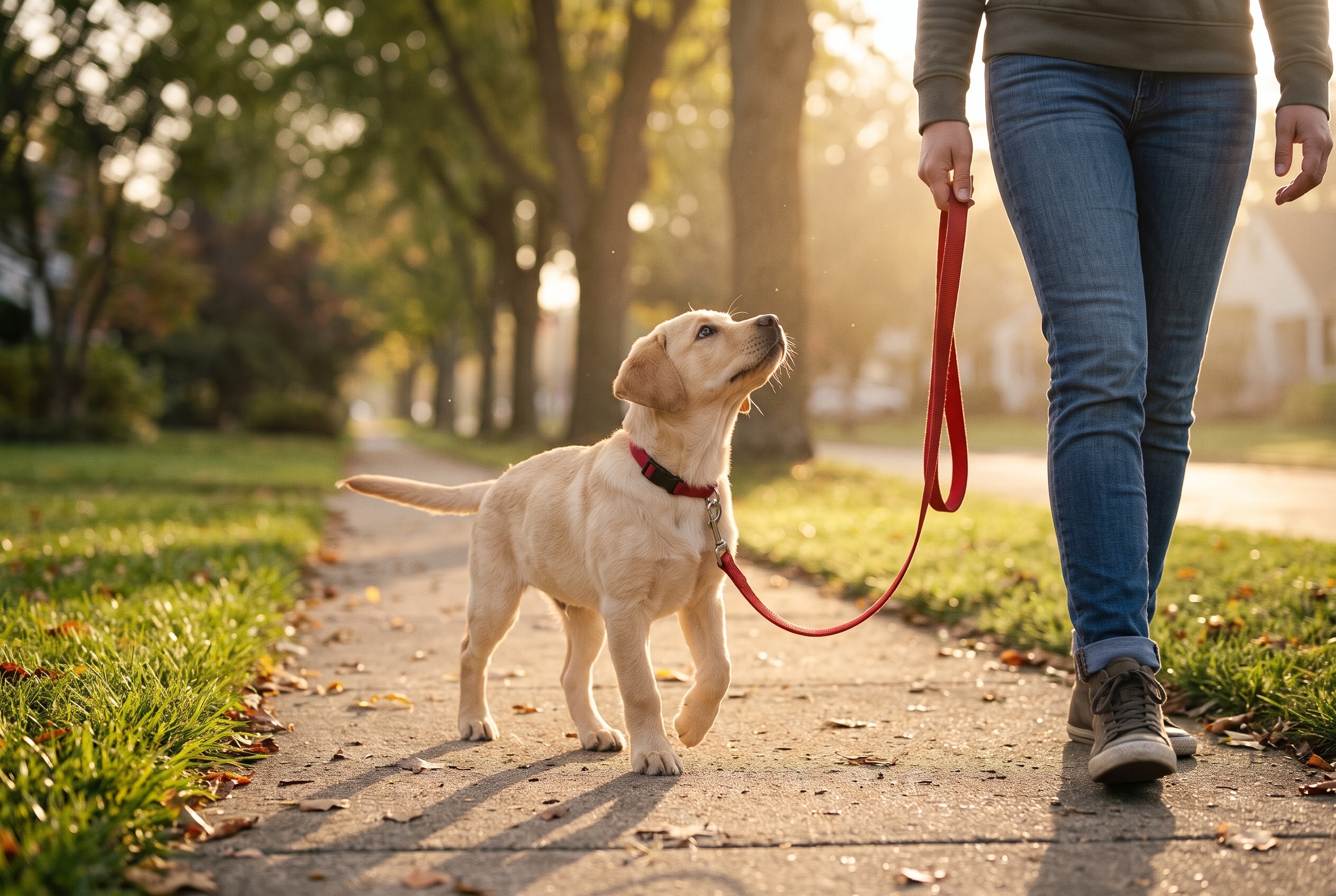
4–5 Months: Building Real-World Skills
Your puppy’s brain is maturing, attention spans are growing, and it’s time to take those skills out into the world.
Loose-leash progress: Reward your pup for walking near you with a slack leash — every few steps earns a treat at first. If they pull, stop walking and reward when the leash goes loose again. No yanking — just teach them that pulling never pays, but sticking close does.
“Come” and recall games: This should be the most joyful word in your pup’s vocabulary. Crouch down, say “come!” happily, and reward like crazy when they run to you. Never call your pup to come for something unpleasant — coming to you must always be a party.
“Leave it”: Hold a treat in a closed fist. When your pup sniffs and pulls away, reward from your other hand. Build up to dropped items. This one command can keep your pup safe from sidewalk chicken bones.
Polite greetings: Teach “four on the floor” — reward the moment all four paws are down, and calmly turn away if they jump. Consistency from everyone in the household makes this click fast.
5–6 Months: Proofing and the Teenage Preview
Your pup knows the basics. Now it’s about making those skills reliable — and surviving the start of adolescence.
Proofing basics: Practice sit, down, stay, and come in new places with new distractions. Start easy (a quiet park corner) and work up. Lower your expectations at first in each new environment and reward generously.
Longer walks: You can stretch outings a bit now, but growing joints don’t need marathon hikes. Sniff walks are perfect — let your pup explore on a long leash. Sniffing is mental exercise.
Adolescence preview: Around this time, many puppies start “forgetting” their training — testing boundaries and getting distracted. This is completely normal, not a sign your training failed. Stay patient, keep sessions fun, revisit easier steps when needed, and remember that consistency now pays off enormously by the one-year mark.
If you’re struggling with a specific behavior — serious fear, aggression, or house training that just isn’t clicking — reach out to a certified professional dog trainer or your vet. There’s no shame in getting expert help.
The Golden Rules (All Six Months)
No matter the stage: train in short, fun sessions; reward the behavior you want; keep socializing well past 12 weeks; stick to a predictable daily rhythm for meals, potty, play, and sleep; and be patient with yourself too — you’re learning right alongside your pup.
Six months from now, that clumsy little land-shark will be a polite young dog who sits on cue, walks nicely, and greets people without launching at them. Every treat you handed out and every calm moment you rewarded adds up. Give your pup an extra treat — you’ve both earned it.
Frequently Asked Questions
How long should each training session be? Keep sessions to 3–5 minutes for young puppies, two or three times a day. End while your pup is still engaged — quitting on a win keeps training something they look forward to.
When can my puppy start going on walks outside? Your vet will advise based on the vaccination schedule, but most puppies can start short outings in low-risk areas after their early rounds of shots. Until then, carry your pup to new places for safe socialization.
What if my puppy seems to regress around 5–6 months? That’s normal adolescent behavior, not a training failure. Temporarily lower expectations, reward the basics again, and keep sessions short and upbeat. Most puppies bounce back quickly with consistent, positive practice.
If you've decided to bring a dog into your home, you have a lot to look forward to. Being a Read more

There's quite a bit of information out there you can use about dog training. It is true that you can Read more

It is important to take our dogs out for a walk at least once a day. But many of us Read more

Would you like invisible, picket or a fence for privacy? There are as many different styles of dog fencing as there Read more