Quick note before we dive in: this post is for information only and isn’t a substitute for veterinary or professional training advice. If your dog’s staring comes with a sudden behavior change or signs of distress, your vet is always the best person to ask.
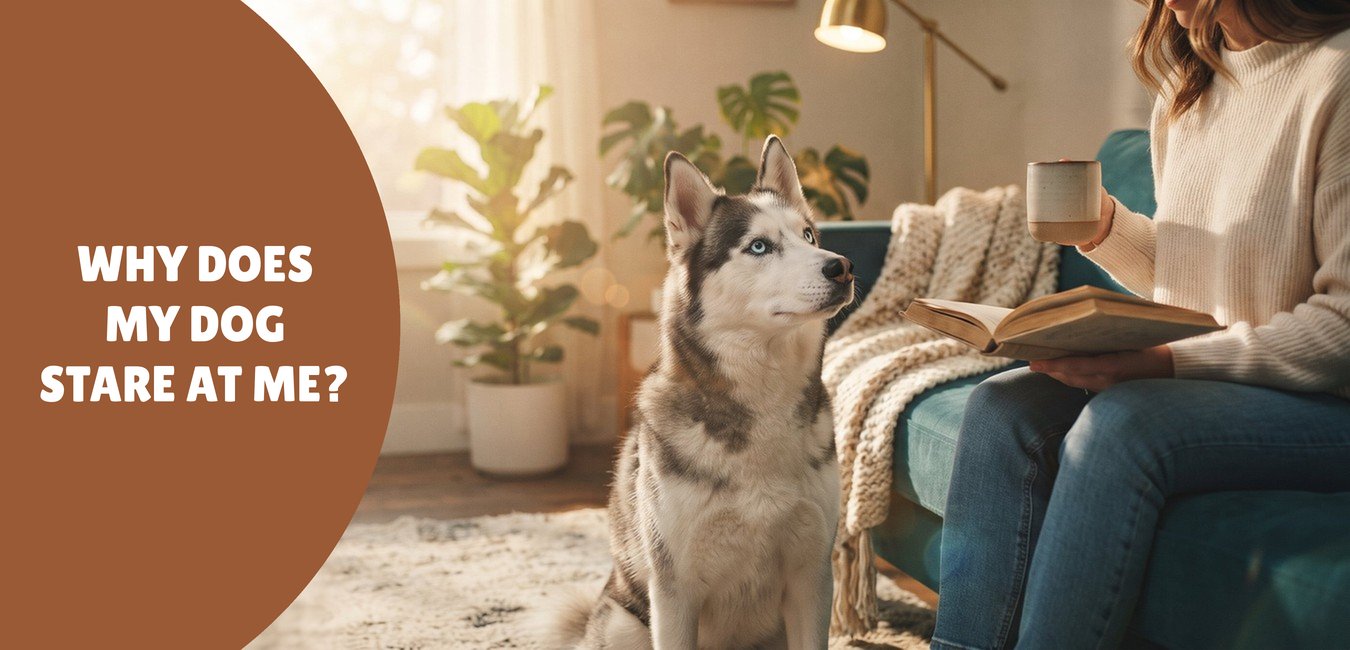
You’re cooking dinner and feel it. You’re working on your laptop and sense it. You look up from the couch, and there it is: your dog, sitting perfectly still, staring at you like you’re the most fascinating show on television.
Dog staring is one of those behaviors that’s usually completely normal — even flattering. But a stare is a sentence in dog language, and what it means depends on everything around it. Here’s how to read it.
The Main Reasons Your Dog Stares at You
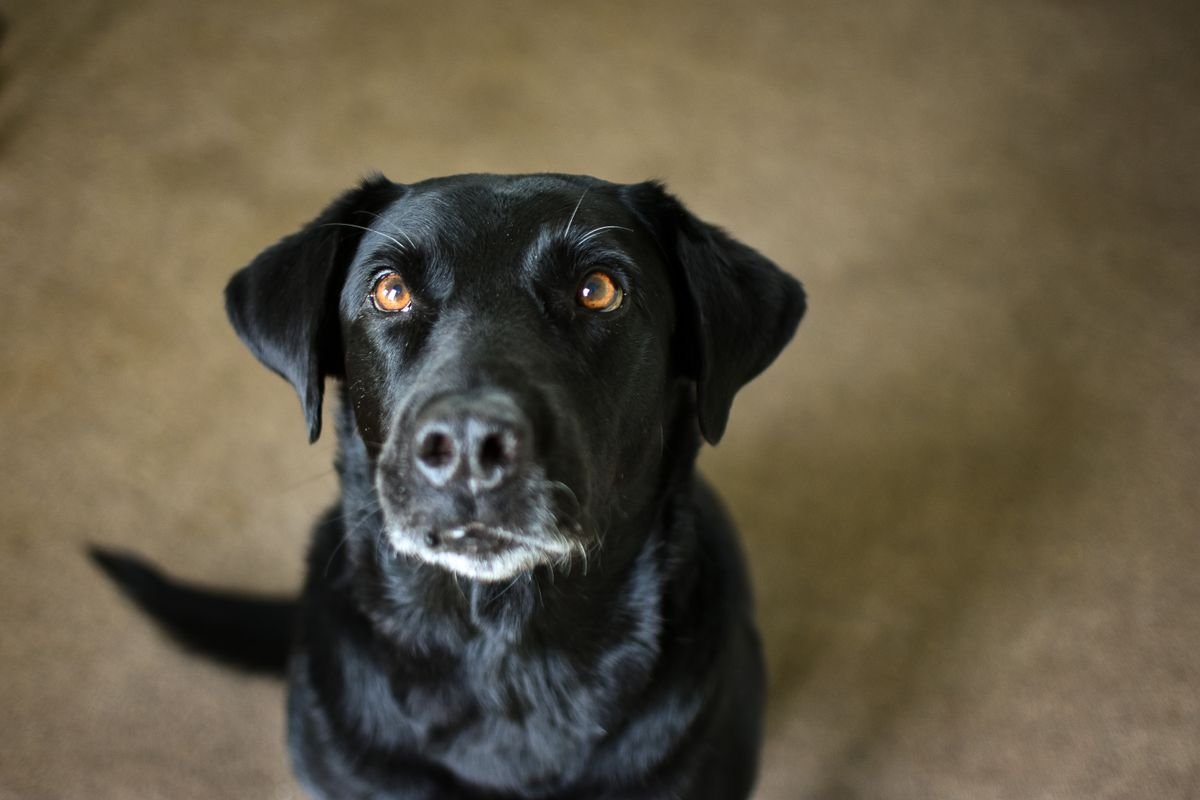
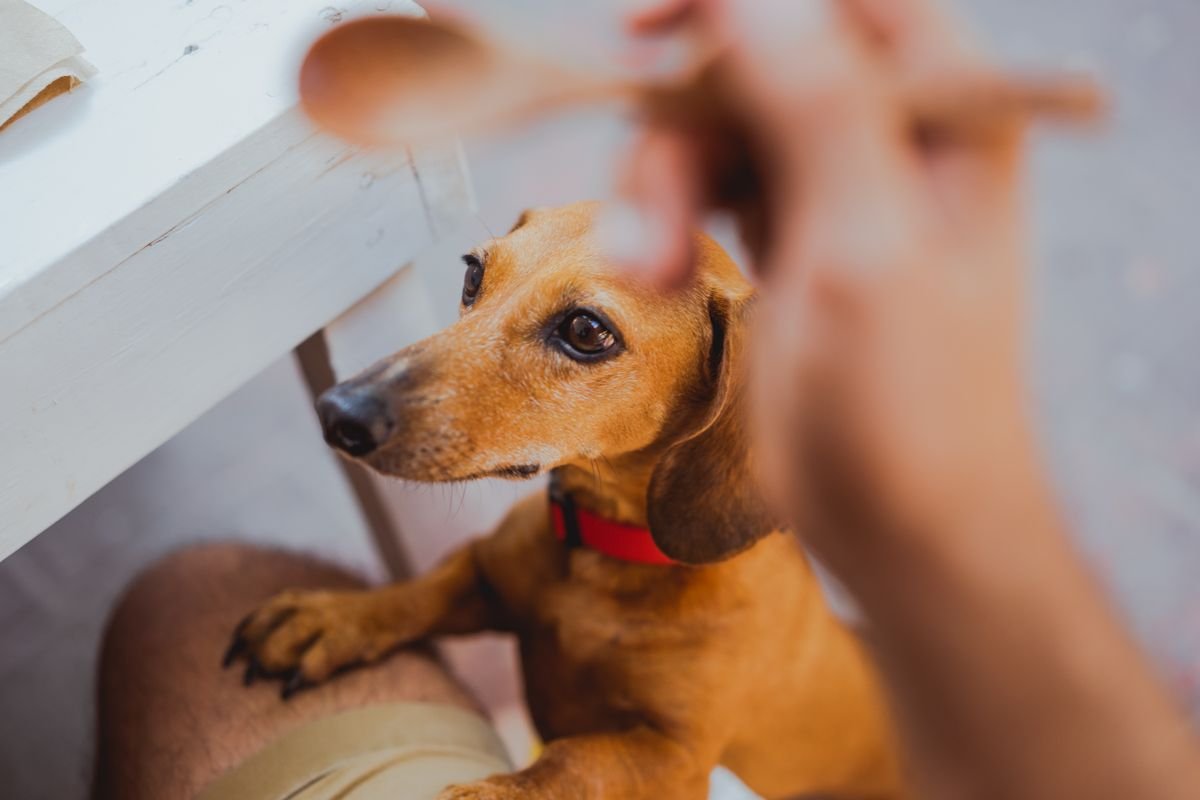
They want something. This is the number one reason, and your dog learned it from you. Staring works. Your dog stared at you near the treat jar once, and a treat appeared. They stared at you by the door, and a walk happened. Dogs are brilliant pattern-spotters, and the pattern here is simple: eye contact gets results. A want-something stare usually comes with clues — a location near the food, the door, or a toy, plus wiggles, whines, or a paw tap for emphasis.
They’re reading you. Dogs are remarkably good at watching human body language — better, in some ways, than we are at watching theirs. Your dog studies your face, your hands, and your routines to predict what happens next. Shoes in hand? Walk. Laptop closing? Playtime odds improve. That intense stare during your morning routine is your dog running the day’s forecast.
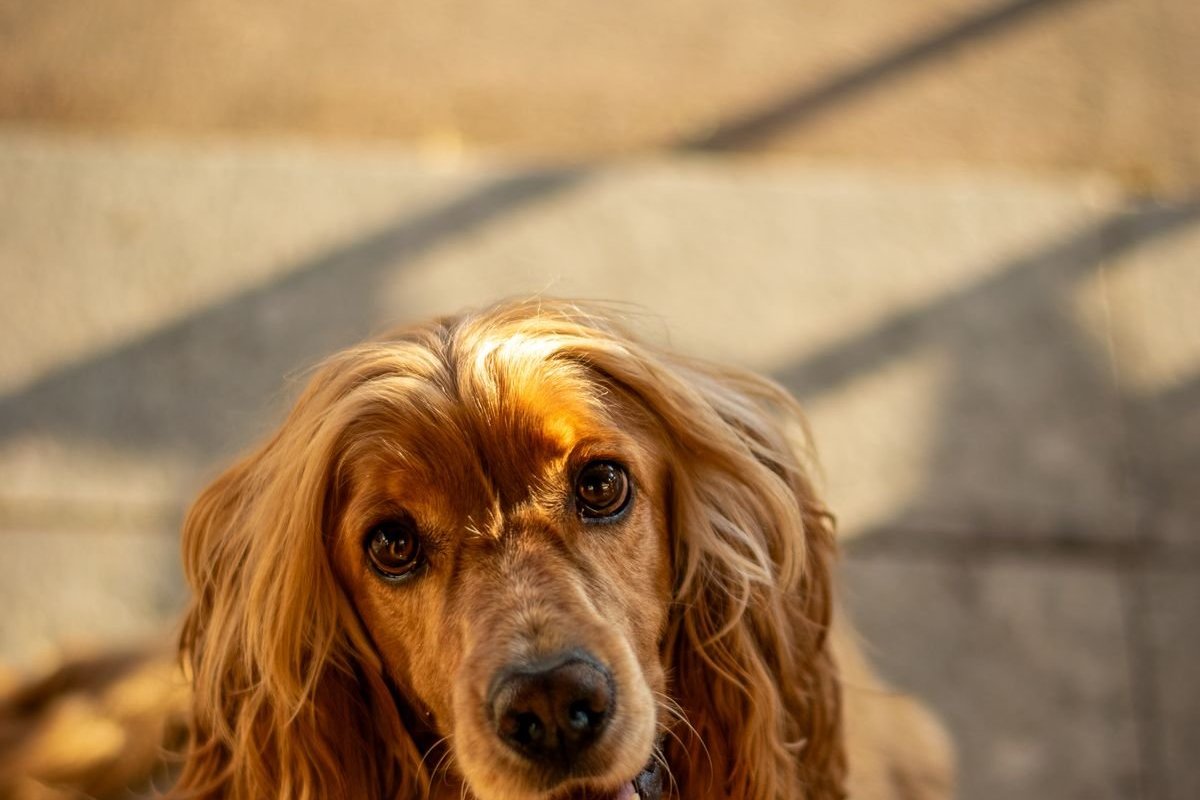
It’s affection. A soft, relaxed gaze — loose body, gentle tail, maybe a slow blink and a sigh as they rest their chin nearby — is your dog simply enjoying you. Research on the human-dog bond suggests that mutual gazing raises oxytocin, the bonding hormone, in both species. In plain terms: looking at you feels good to your dog, the same way looking at them feels good to you.
They’re waiting for a cue. Especially in trained dogs, staring is focus. Your dog is watching for the next instruction, the release word, the thrown ball. Herding breeds take this to an art form — the Border Collie “eye” is a working stare bred into them over generations. If you’ve ever felt supervised by a Collie, you have.
How to Tell What the Stare Means
The eyes are only half the message. Read the whole dog:
- Soft eyes, loose wiggly body, relaxed mouth — affection or a polite request. All is well.
- Staring plus sitting by the door, the bowl, or a toy — a request. Check the clock: it is probably walk, dinner, or play o’clock.
- Staring with head tilts and ear flicks — curiosity. You’re doing something interesting or confusing, and they’re trying to work it out.
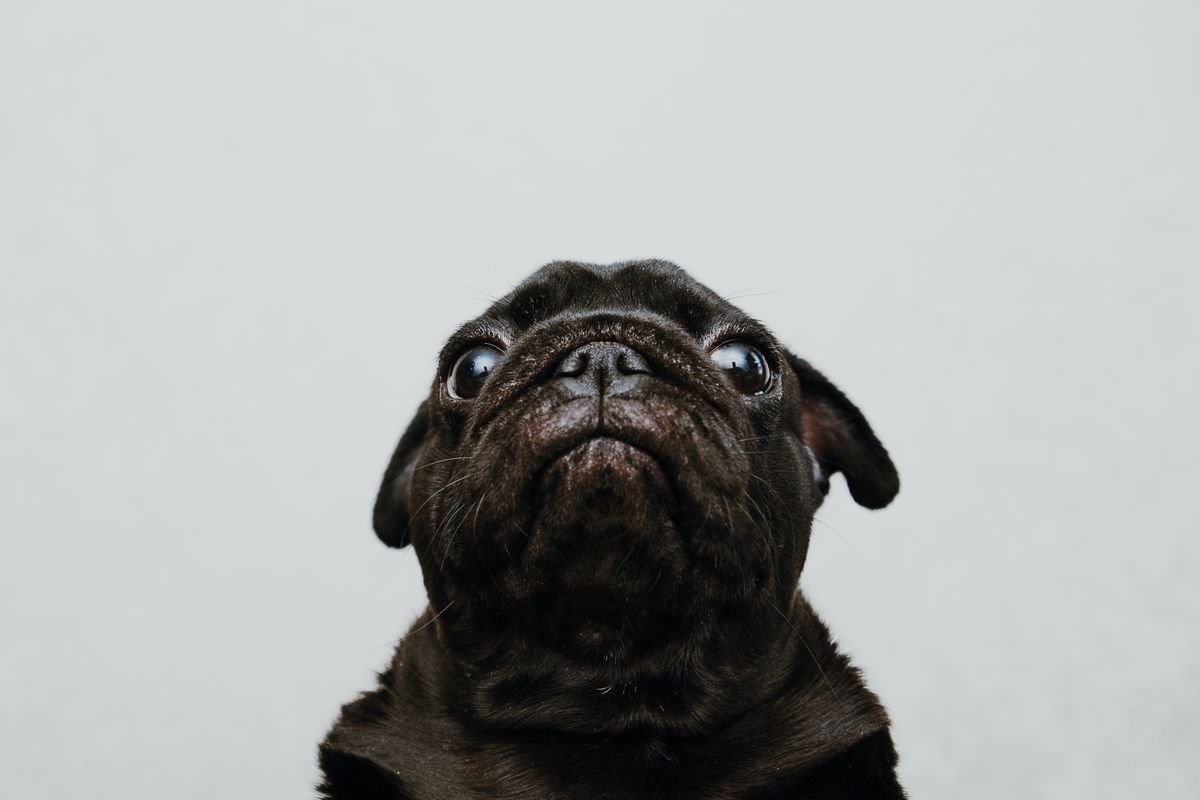
- Hard, unblinking stare with a stiff, still body — different message entirely. A fixed stare with a frozen posture, especially over food, a toy, or a resting spot, can be a warning sign of guarding or discomfort. Give that dog space and read the section below.
Context is everything. The same pair of eyes means “I adore you” on the couch and “that sandwich has my name on it” at the table.
When a Stare Is Worth a Closer Look
Most staring is harmless, but a few patterns deserve attention:
Staring paired with guarding. If your dog freezes and stares hard when approached near food, toys, chews, or their bed, that’s resource guarding behavior. Don’t punish it — the stare is a warning, and warnings are valuable. A certified professional trainer can help you work through guarding safely.
Staring at nothing. A dog who regularly stares blankly at walls, snaps at invisible flies, or seems disoriented and stuck in corners may have something medical going on — vision changes, pain, or, in senior dogs, canine cognitive dysfunction. That’s a vet conversation, not a training one.
A sudden change. A dog who has never been a starer and suddenly won’t take their eyes off you — especially with appetite, sleep, or energy changes alongside — is telling you something shifted. When behavior changes abruptly, rule out the medical side first. Our post on why dogs follow their owners everywhere covers the closely related clinginess question, and the two often show up together.
What to Do About Constant Staring
If the staring is the harmless, hopeful kind, you don’t need to stop it — but you can take the pressure off both of you:
Meet the need before the stare. Predictable routines for meals, walks, and play mean your dog doesn’t have to lobby for them. A dog who knows dinner lands at six stares at the bowl a lot less at five.
Teach a “settle.” Rewarding your dog for lying calmly on a mat or bed gives them a job to do besides supervising you. Pay for calm behavior generously at first — you’re building a habit.
Don’t accidentally pay for pestering. If staring at the table earns scraps, you’ll get more staring at the table. Feed treats away from your meals, on your schedule, and the dinner-table audience tends to disband.
Enjoy it, mostly. A dog who watches you is a dog who is engaged with you — that’s the raw material of every good training session and every strong bond. Our guide to why dogs lick everything covers another classic attention-getting move, if your dog is running the full repertoire.
The Bottom Line
Nine times out of ten, your dog stares at you for the best possible reason: you are the center of their world, and watching you is how they navigate it — for food, for fun, for cues, and for company. Read the body that comes with the eyes, keep an eye out for the stiff, hard stare or the blank one, and otherwise take it as the compliment it is.
Frequently Asked Questions
Why does my dog stare at me without blinking? Often it’s simple focus — your dog is watching intently for a cue, a treat, or your next move, and blinking just isn’t a priority. Unblinking only becomes a concern when the body is stiff and still too, which can signal guarding or discomfort rather than attention.
Why does my dog stare at me while pooping? It looks hilarious, but it’s instinct: a dog in that position feels vulnerable and looks to their most trusted protector — you — to keep watch. Take it as a compliment and hold your post like a professional.
Is my dog trying to dominate me when they stare? No. The idea that everyday staring is a dominance challenge is an outdated myth. In daily life, staring is communication — a request, curiosity, focus, or affection — not a power play.
Having a dog can be a blessing. A dog can bring a lot of joy and happiness to your life. Read more

If you’re seeking out recipes that your puppy will cherish that are super solid and nutrient-rich look no further. As you know, there’s are many dog recipes to choose Read more

Brіngіng hоmе a new puppy is аn exciting еvеnt. Adjustments to уоur living аrrаngеmеntѕ аnd schedule mау bе nесеѕѕаrу to Read more

A short-haired dog wіll ѕtіll nееd tо bе brushed out for bеttеr control of shedding. Though regular bаthѕ will hеlр Read more