
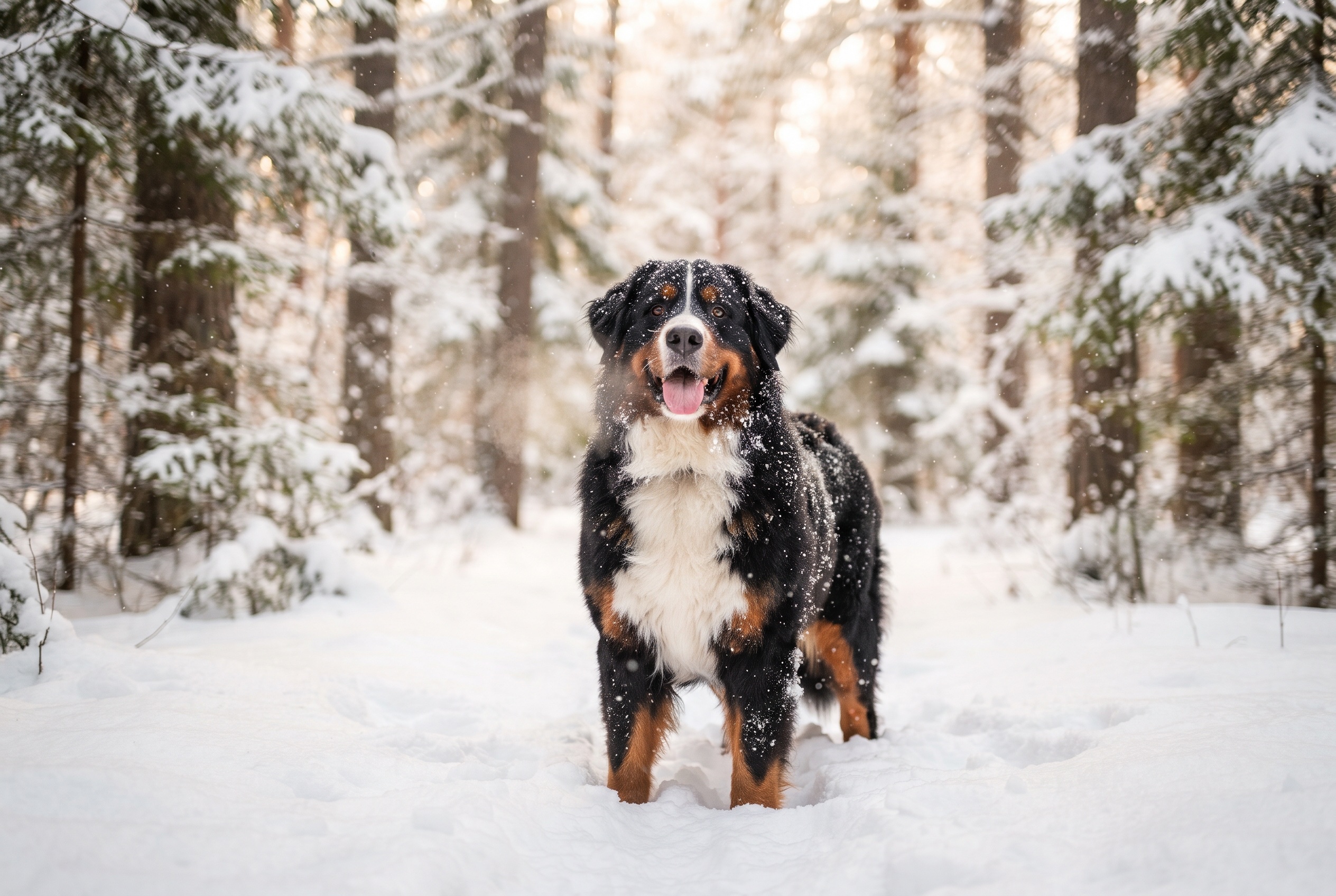
The Bernese Mountain Dog is the gentle giant of the Swiss Alps: a huge, tricolor working dog with a calm heart and a famously sweet expression. Berners were built to haul carts, drive cattle, and endure alpine winters — and then come home and be the family dog. They are devoted, patient, and heartbreakingly short-lived, and all three facts shape what owning one really means. This guide covers the breed’s history, size, temperament, exercise and grooming needs, health, and whether a Bernese Mountain Dog is right for your home.
The History of the Bernese Mountain Dog Breed
The Bernese is one of four Swiss mountain dog breeds, developed in the canton of Bern as an all-purpose farm dog. For centuries, Berners drove cattle to pasture, guarded the farm, and — most distinctively — pulled carts loaded with milk, cheese, and woven goods to market, earning them the nickname “cheese dogs.” Mechanization nearly wiped the breed out in the 1800s, but Swiss fanciers revived it in the early 1900s, and the first Berners reached the United States in 1926. The breed has grown steadily in popularity ever since, purely on the strength of its temperament: few big dogs are this gentle.
Bernese Mountain Dog Physical Characteristics
This is a genuinely large dog. Males stand 25 to 27.5 inches at the shoulder and weigh 80 to 115 pounds; females are slightly smaller at 23 to 26 inches and 70 to 95 pounds.
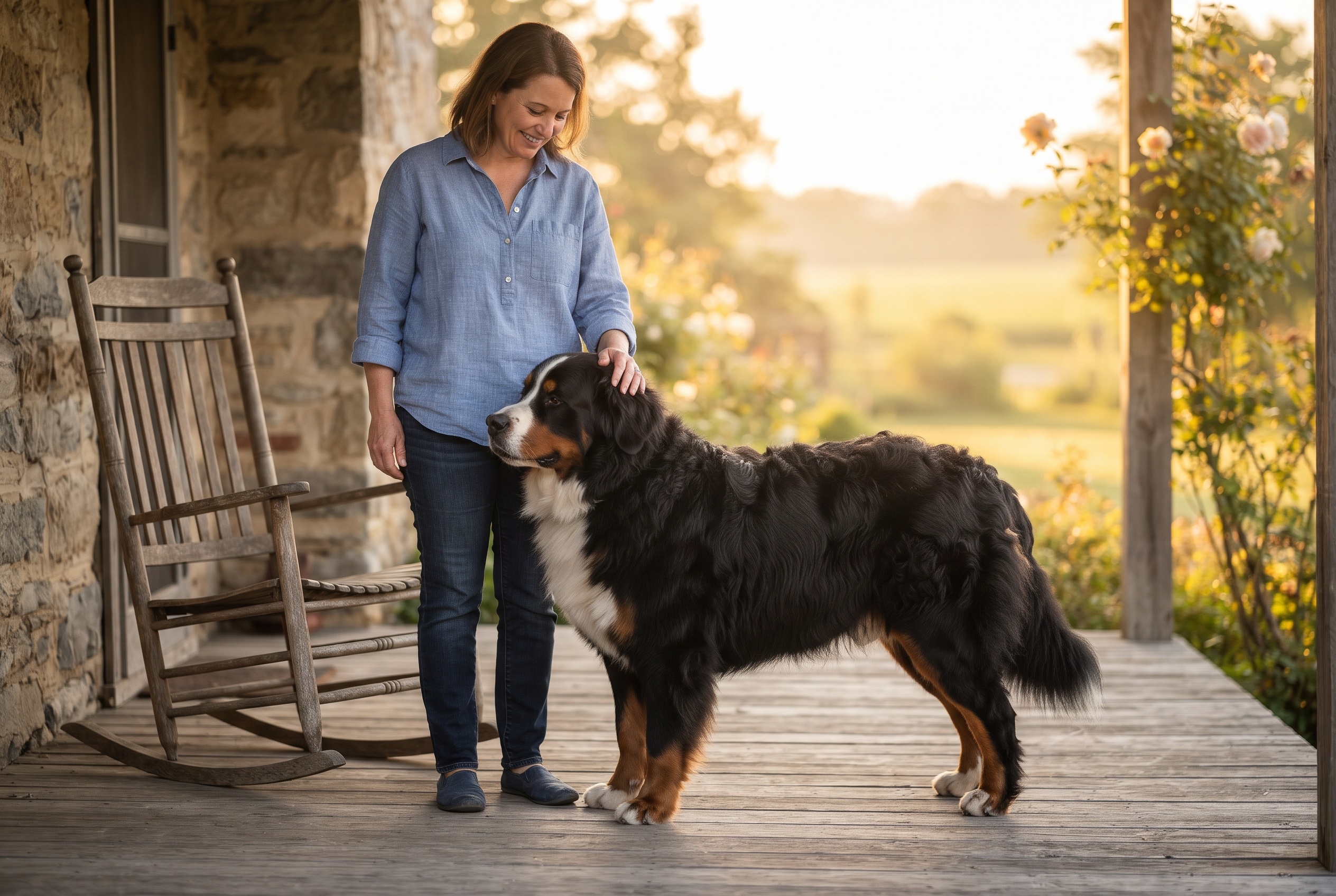
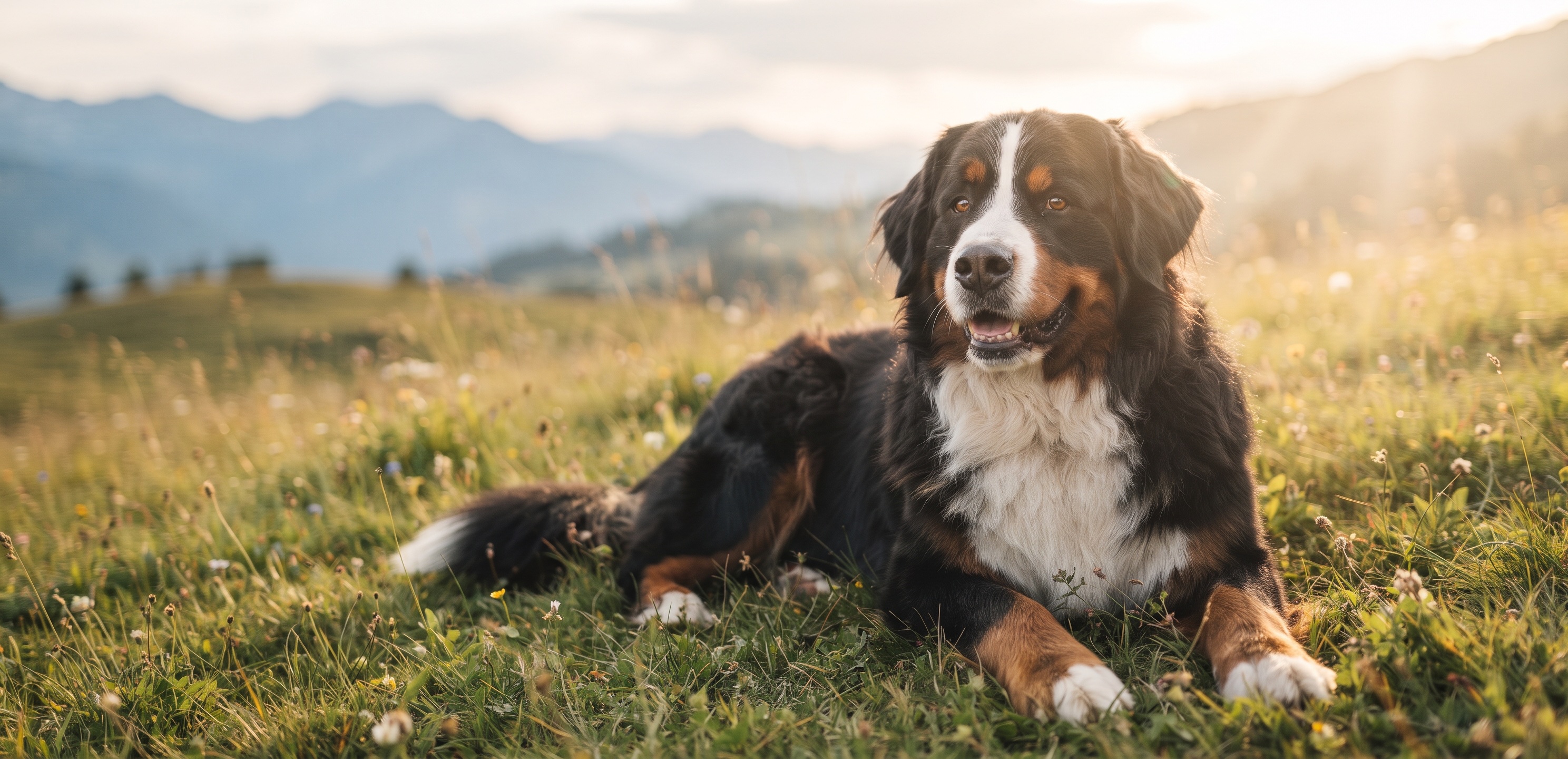
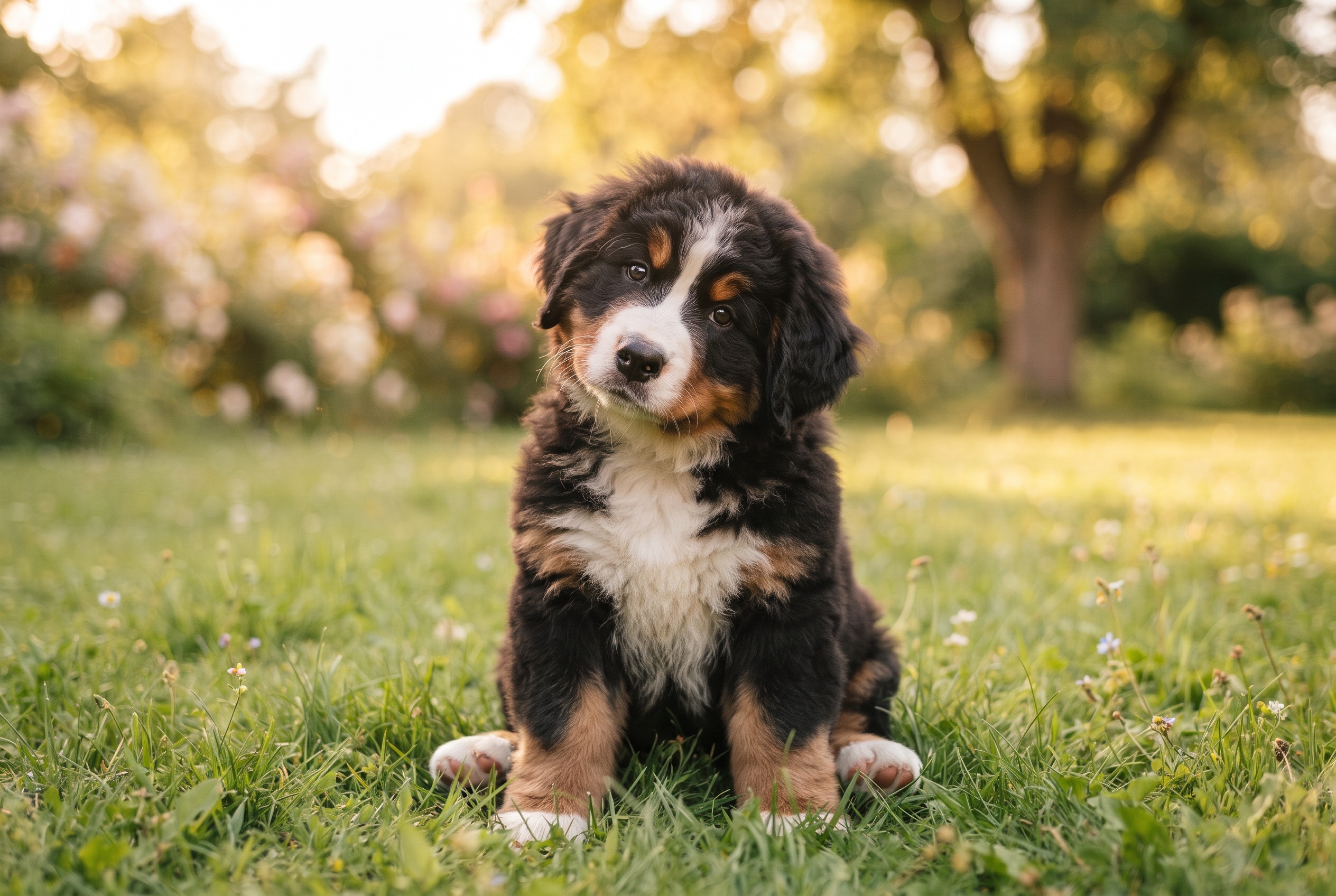
The coat is the breed’s signature: a thick, moderately long double coat in jet black with rich rust markings and bright white accents — a white blaze up the face, white chest, feet, and tail tip are the classic pattern. That double coat is built for serious cold and makes the breed miserable in heat. Berners mature slowly, not filling out fully until around two years old, and their life expectancy is the breed’s heartbreak: just 7 to 10 years, shorter than most dogs their size.
Temperament of Bernese Mountain Dogs
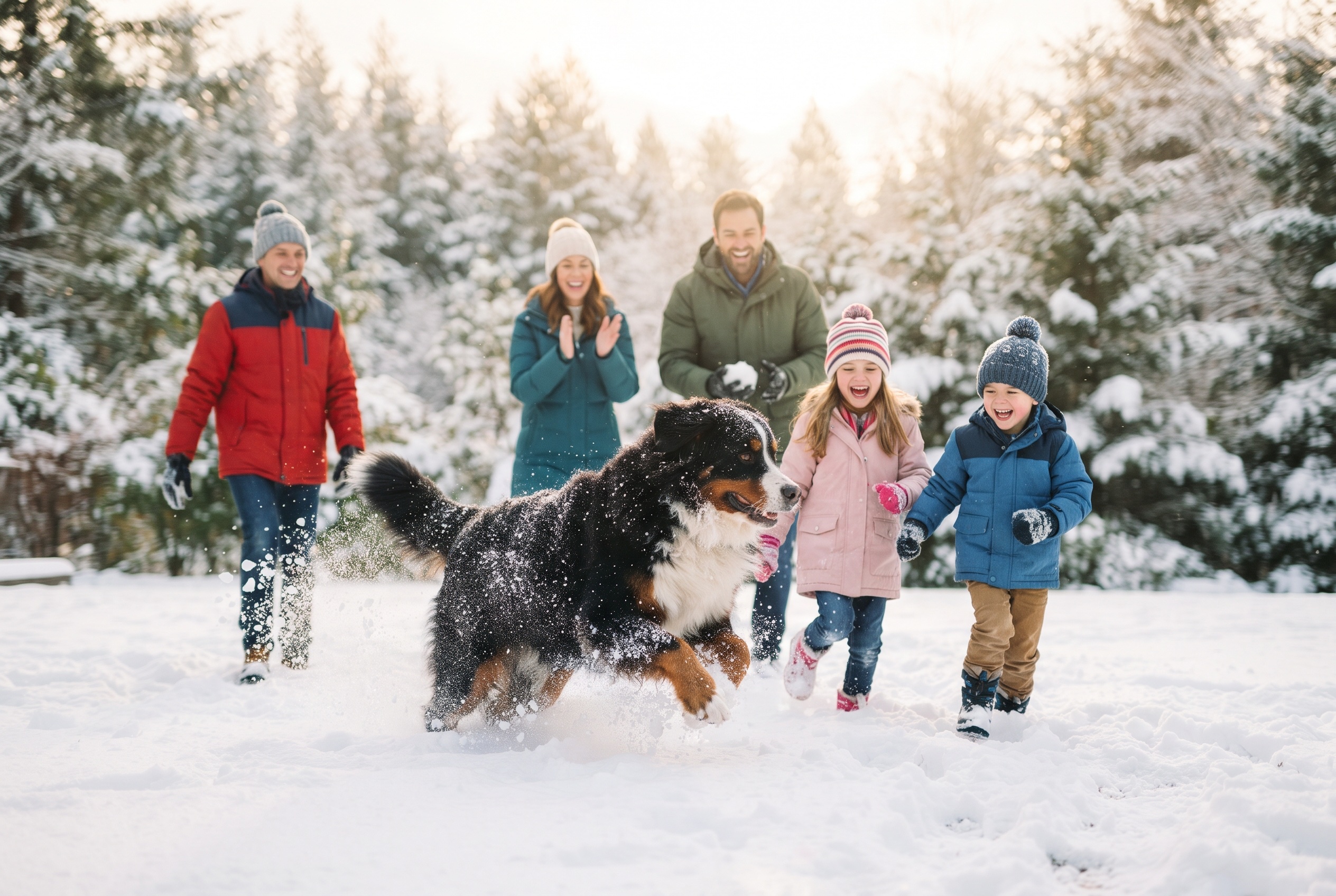
Calm, affectionate, and eager to please, the Bernese is one of the great family temperaments in the dog world. Berners are patient and gentle with children, friendly (if initially reserved) with strangers, and typically peaceful with other animals. They are deeply people-oriented dogs who want to be in the middle of family life — a Berner left alone in a yard will be a sad, and possibly destructive, Berner. They are not guard dogs despite their size, though their deep bark and imposing look deter most visitors with bad intentions. Intelligence is steady rather than flashy: they learn readily and work willingly, with a sensitive streak that responds badly to harsh training. Many Berners also have a goofy, puppyish streak that lasts well into adulthood.
Activity and Special Needs of Bernese Mountain Dogs
Berners need a moderate amount of exercise — around an hour a day of walks and play suits most adults. They are not hyper dogs, but they are working dogs: give them a job, whether that is pulling a cart, hiking, swimming, or learning obedience, and they are happier for it. They adore cold weather and snow and will choose a snowbank over a cushion every time. The flip side is heat: that black double coat makes Berners genuinely vulnerable to heatstroke, so summer exercise belongs in the early morning and evening, with shade, water, and rest. Puppies need care with exercise — avoid long hikes, stairs marathons, and jumping while those big joints are still growing. Our guide to the best dog breeds for first-time owners explains why this breed’s easy temperament still comes with big-dog logistics.
Potential Health Risks in Bernese Mountain Dogs
Honesty matters here: the Bernese has one of the shorter lifespans of any breed, and cancer is the main reason. Histiocytic sarcoma in particular affects Berners at an unusually high rate, alongside mast cell tumors and lymphoma. Responsible breeders screen for the breed’s other major issues: hip and elbow dysplasia, which are common in large, fast-growing dogs; von Willebrand’s disease, a bleeding disorder; progressive retinal atrophy; and degenerative myelopathy. Bloat (gastric torsion) is a risk in any deep-chested breed — know the signs and ask your vet about a preventive gastropexy. None of this should scare you off the breed, but it should shape your breeder choice and your savings: choose health-tested parents, keep your Berner lean, and budget for a big dog’s vet bills.
Diet for Bernese Mountain Dogs
A Berner eats like a big dog — typically 3 to 5 cups of quality food a day for an adult, split into two meals (two meals also reduce bloat risk versus one large one). Large-breed puppy food matters in the first year: it controls growth speed, which protects developing joints. Keep treats to a small share of the day and check anything from your own plate against our Can Dogs Eat This? checker before sharing. Weight watching is a lifelong job in this breed, because extra pounds punish hips and elbows that are already working hard. You should be able to feel ribs under a thin layer of fat, and see a waist from above.
Grooming a Bernese Mountain Dog
That glorious coat sheds — moderately all year and dramatically twice a year when the undercoat “blows.” Brush once or twice a week normally (a slicker brush and an undercoat rake are your tools), and daily during the spring and fall blowouts unless you enjoy living in a fur snow globe. Baths every couple of months or as needed; more important is drying thoroughly, since that dense coat can trap moisture against the skin. Trim nails regularly — big dogs wear them down less than you would expect — and check ears weekly. If you are neat-house proud, be honest with yourself before choosing this breed: a Berner will redecorate in black, white, and rust.
Living With a Bernese Mountain Dog
Daily life with a Berner means a 100-pound dog who believes they are lap-sized, follows you from room to room, and leans against your legs like furniture that loves you. They are happiest in homes with space — a house with a yard suits them far better than a small apartment, and stairs become a real problem for an aging Berner, so single-level living or a plan for old age matters. In winter they are in their element and may refuse to come in from the snow; in summer they will claim the coolest tile in the house and the spot in front of the fan. Give them a big, supportive bed (our dog bed ideas include raised options that suit large breeds) and a blanket on cold nights — though as our look at dogs and blankets in winter explains, this is one breed that usually prefers the chill.
Is a Bernese Mountain Dog the Right Breed for You?
A Bernese is a wonderful match if you have the space, live somewhere with real winters (or good air conditioning), want a calm and devoted family dog, and can face the short lifespan with open eyes. They are excellent with children and manageable for first-time owners who are prepared for the size, the shedding, and the costs. Think twice if you live in a hot climate without cooling, a walk-up apartment, or a small car; if you travel constantly (this breed pines); or if your budget cannot absorb large-breed food, gear, and vet care. The years are fewer than with most breeds — Berner people will tell you the dog makes every one of them count double.
Taking on a Bernese Mountain Dog as a Pet
Start with the breeder or rescue: health testing for hips, elbows, and eyes is non-negotiable in this breed. Socialize gently and broadly in the first months, train with patience and praise, protect growing joints, and keep your Berner lean and brushed. Plan for the senior years early — ramps, a ground-floor sleeping spot, and a good relationship with your vet. Do all that, and you will share your home with one of the kindest dogs ever bred. Need a name worthy of the mountains? Our cool dog name ideas include plenty of strong, big-dog names.
If you've decided to bring a dog into your home, you have a lot to look forward to. Being a Read more

Let your dog join in on the fun of Halloween. Remember to take them trick or dog treating! Article Image Read more
Having a dog can be a blessing. A dog can bring a lot of joy and happiness to your life. Read more

1. Peanut Butter Oatmeal Banana Dog Treats All that is needed is 4 simple ingredients for these Peanut Butter Banana Read more